
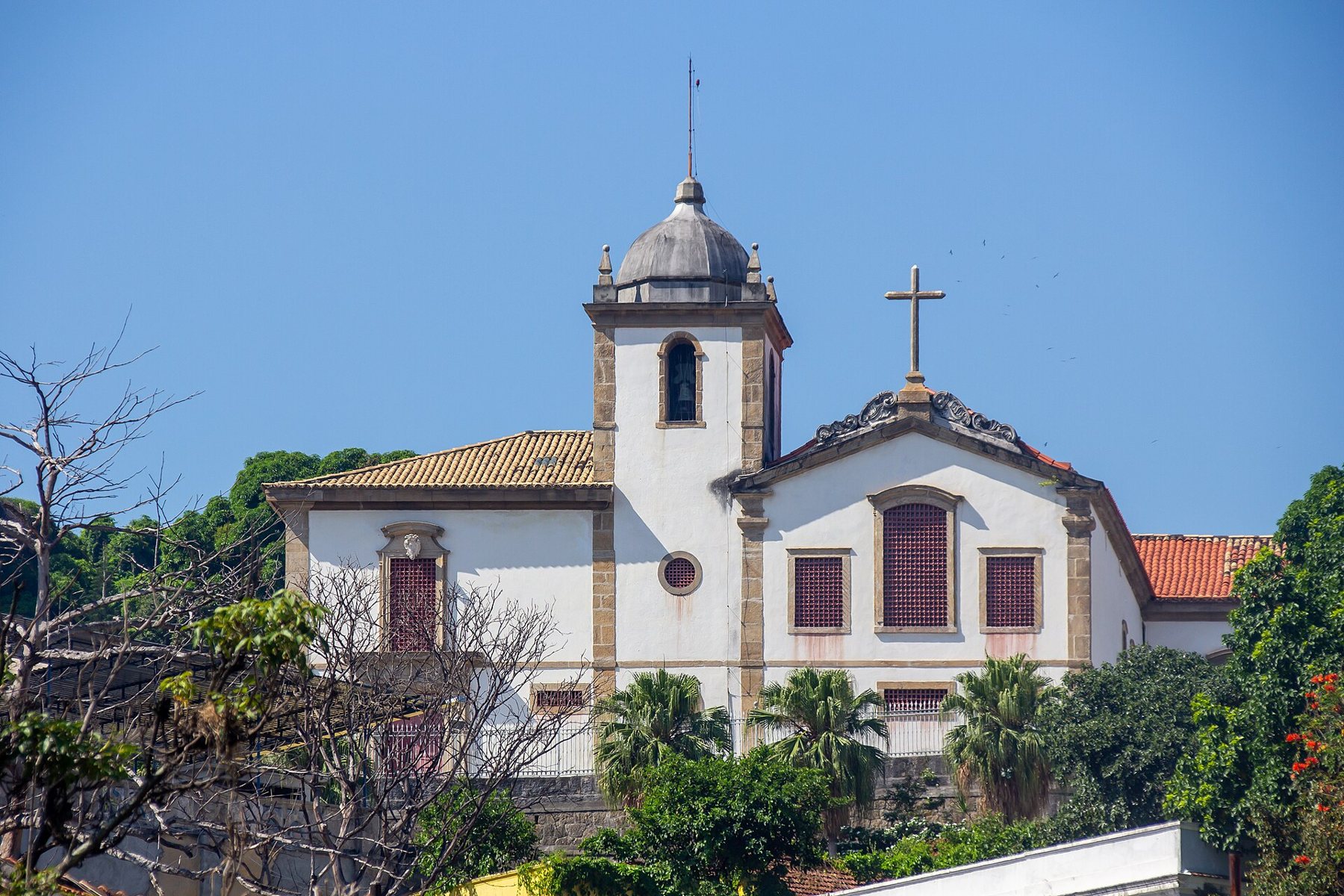
Santa Teresa sits on a ridge between the old centre of Rio and the bay-side neighbourhoods to the south. In the nineteenth century, wealthy families built mansions up here to escape the heat and disease of the lowland city. Many of those houses still stand, some restored as homes, studios and small museums, others crumbling behind iron gates under a tangle of trees. Between them run steep, cobbled streets that twist along the contours of the hill.
The neighbourhood takes its name from the convent of Carmelite nuns built on its lower slope in the eighteenth century, which still stands near the top of the steps to Lapa. Today Santa Teresa is known for artists, studios and its old tram, and it is one of the most rewarding places in Rio to explore on foot, provided you are ready for the hills.
Starting at Largo dos Guimarães
The small square of Largo dos Guimarães is the heart of the neighbourhood and the best place to begin. The tram line runs through it, the streets around it hold small galleries and craft studios, and on a weekday morning it is calm enough to get your bearings. You can reach it by taxi or app car from anywhere in the city, or, on days it is running, by the bonde.
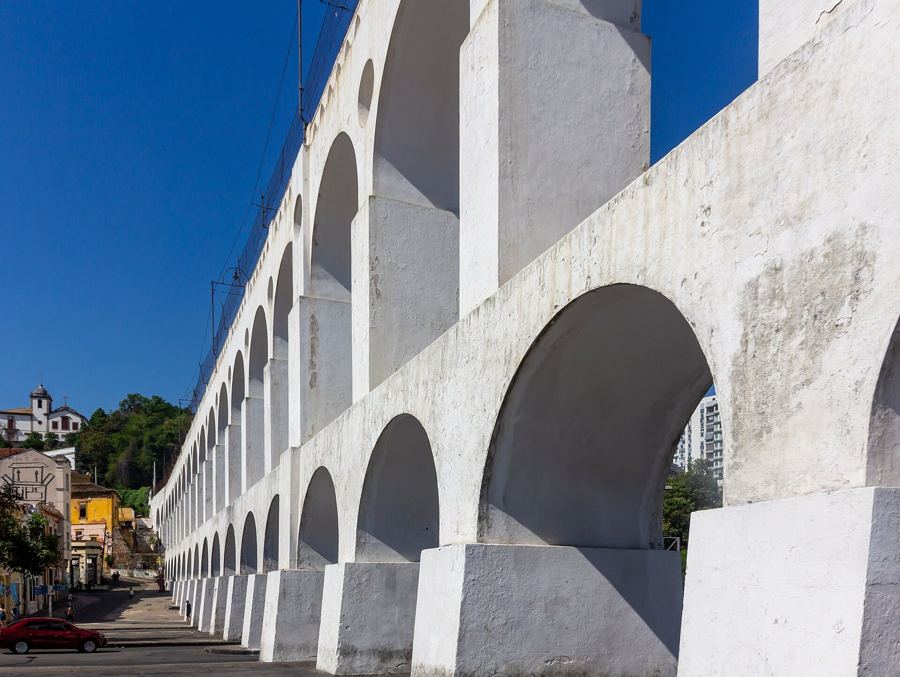
Take a few minutes in the square before setting off. The houses around it show the mix that defines the neighbourhood: restored mansions next to modest homes, small shops at street level, and steep lanes vanishing uphill. The bonde is Santa Teresa's tram, a little open-sided yellow car that has climbed the hill from the city centre since the late nineteenth century. Its route starts near Largo da Carioca, crosses the Arcos da Lapa on top of the old aqueduct, and winds up into the neighbourhood. Service was suspended for several years after a serious accident in 2011 and has since returned on part of the route, with timetables and fares that change: check the current service before you plan around it. Even if you do not ride it, the rails set into the cobbles are your guide along the main streets.
The route through the hill
From Largo dos Guimarães, follow the tram rails gently uphill along the main street, Rua Almirante Alexandrino, past old houses with wrought-iron balconies and gardens spilling over walls. Side streets drop away steeply on either side, giving sudden views down to the city and the water.
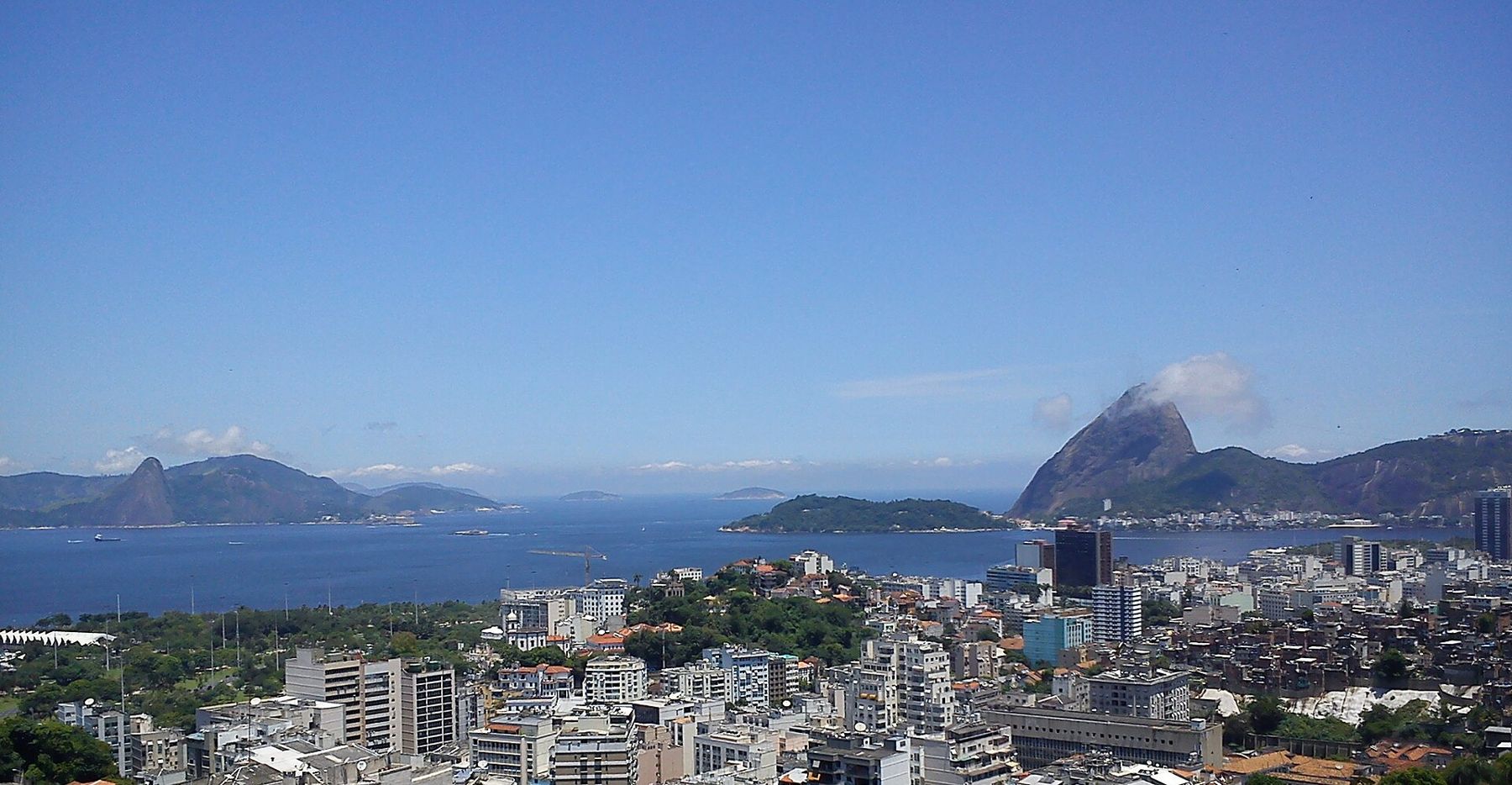
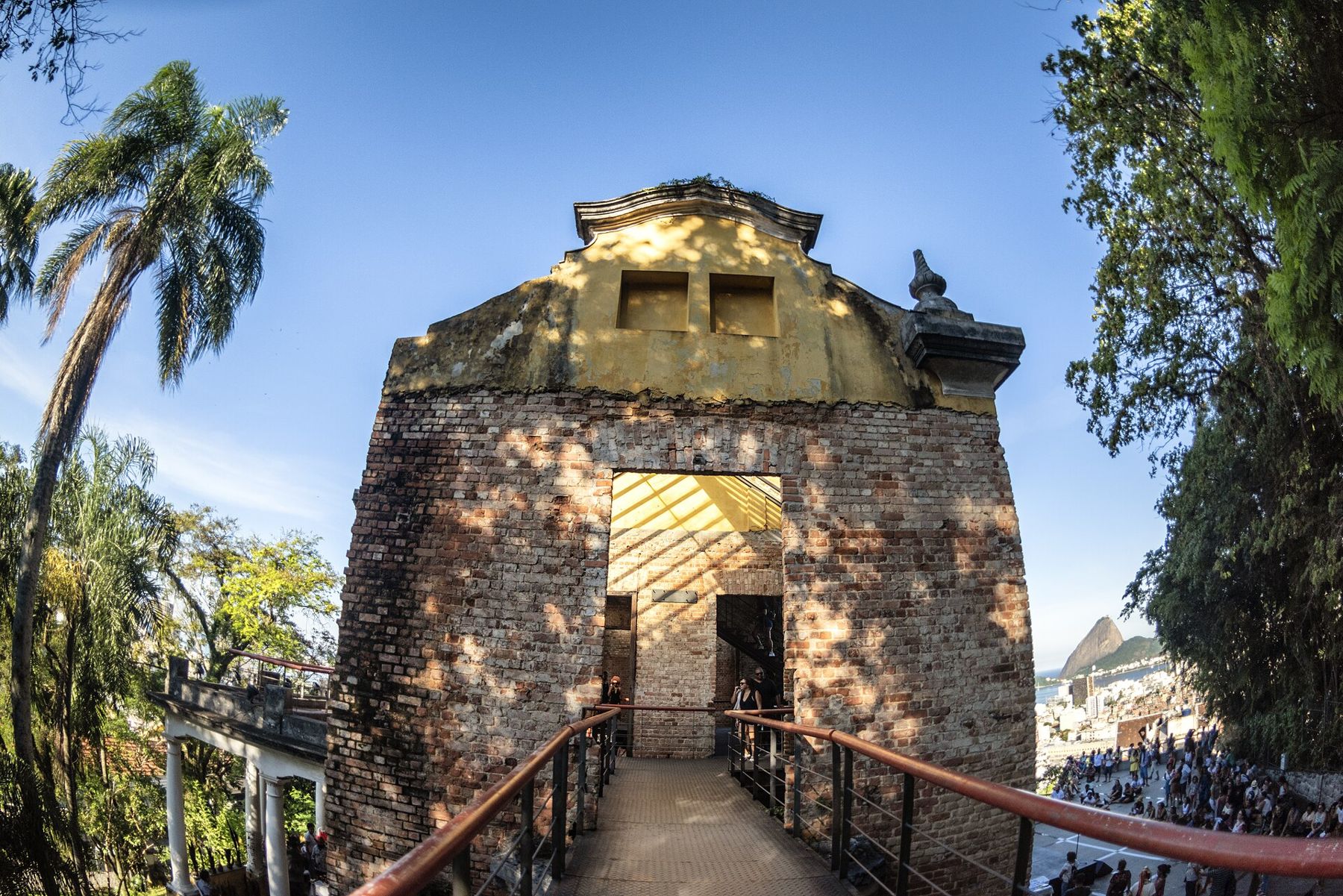
A short way along, signs point to the Parque das Ruínas. This is the shell of a grand early twentieth-century mansion, once the home of a famous hostess of the city's artistic circles. The ruins have been turned into a cultural space with walkways threaded through the brick walls, and from its upper terrace the view takes in the old centre, the bay, the bridge to Niterói and the Sugarloaf. It is the best viewpoint on the walk, and entry has usually been free; check opening days.
Next door, the Museu da Chácara do Céu occupies a modernist house set in a hillside garden. It holds a private art collection of Brazilian and European works, and its garden is another fine place to look out over the city. Opening hours are limited, so check in advance if you want to go inside.
It is the best viewpoint on the walk, and entry has usually been free
From the park, you can continue along the ridge before turning back towards Largo dos Guimarães by a parallel street, making a loop of about 3.5 km with plenty of climbing.
Down to Lapa by the steps
The most memorable way to leave Santa Teresa is on foot, down the tiled staircase that links the neighbourhood with Lapa. The top of the steps lies near the old convent on the lower part of the hill. Going down is far easier than climbing up, and it brings you out right by the white arches of the aqueduct. That end of the walk is described in the Lapa arches and the tiled steps, and the arches themselves carry the bonde's tracks across the valley.
On the way down, the tiles change with every flight of steps, and you can spend a long time picking out designs from different countries. Go slowly; the steps are uneven and often crowded with people taking photographs.
If you prefer not to walk down, a taxi from Largo dos Guimarães is simple to arrange and quick.
Studios, workshops and the open-house weekend
Santa Teresa has long drawn painters, sculptors, photographers and craftspeople, attracted by the light, the views and the space in its old houses. Many work from studios in their homes, and the streets around Largo dos Guimarães hold small galleries and craft workshops selling prints, ceramics and handmade goods. Once a year, in a long-running open-studio event, many artists open their doors to visitors; dates vary, so check if your trip falls near it.
Even on an ordinary day, the neighbourhood's art is visible in the street: murals on walls, mosaics on steps, carved wooden signs and the riot of colour on the facades. Slow down, look up and look through the gates, and the walk becomes a long, informal gallery.
Slopes, cobbles and heat
Santa Teresa is not a long walk, but it is a tiring one. The streets are steep, the cobbles are uneven and slippery when wet, and pavements are narrow or missing in places, so you sometimes share the road with cars and the tram. A few tips:
- Wear shoes with real grip; sandals slide on the polished stones.
- Start early, before the heat builds, and carry water.
- Walk facing traffic where there is no pavement, and listen for the bell of the tram.
- Take breaks in the shade of the squares and gardens.
Staying sensible on the hill
Like much of Rio, Santa Teresa has busy, well-visited streets and quieter ones close to communities on the surrounding hillsides. Stick to the main streets of the route, walk in daylight, and do not wander off into quiet lanes or long stairways unless someone local has told you they are fine that day. Carry little, keep your phone out of sight when you are not using it, and leave valuables where you are staying. Ask at a museum or your accommodation about current advice; conditions vary.
Santa Teresa pairs naturally with the old centre below it. After the steps, the walk through Cinelândia's theatre square or the squares of Centro by day is only a short distance away on the flat.