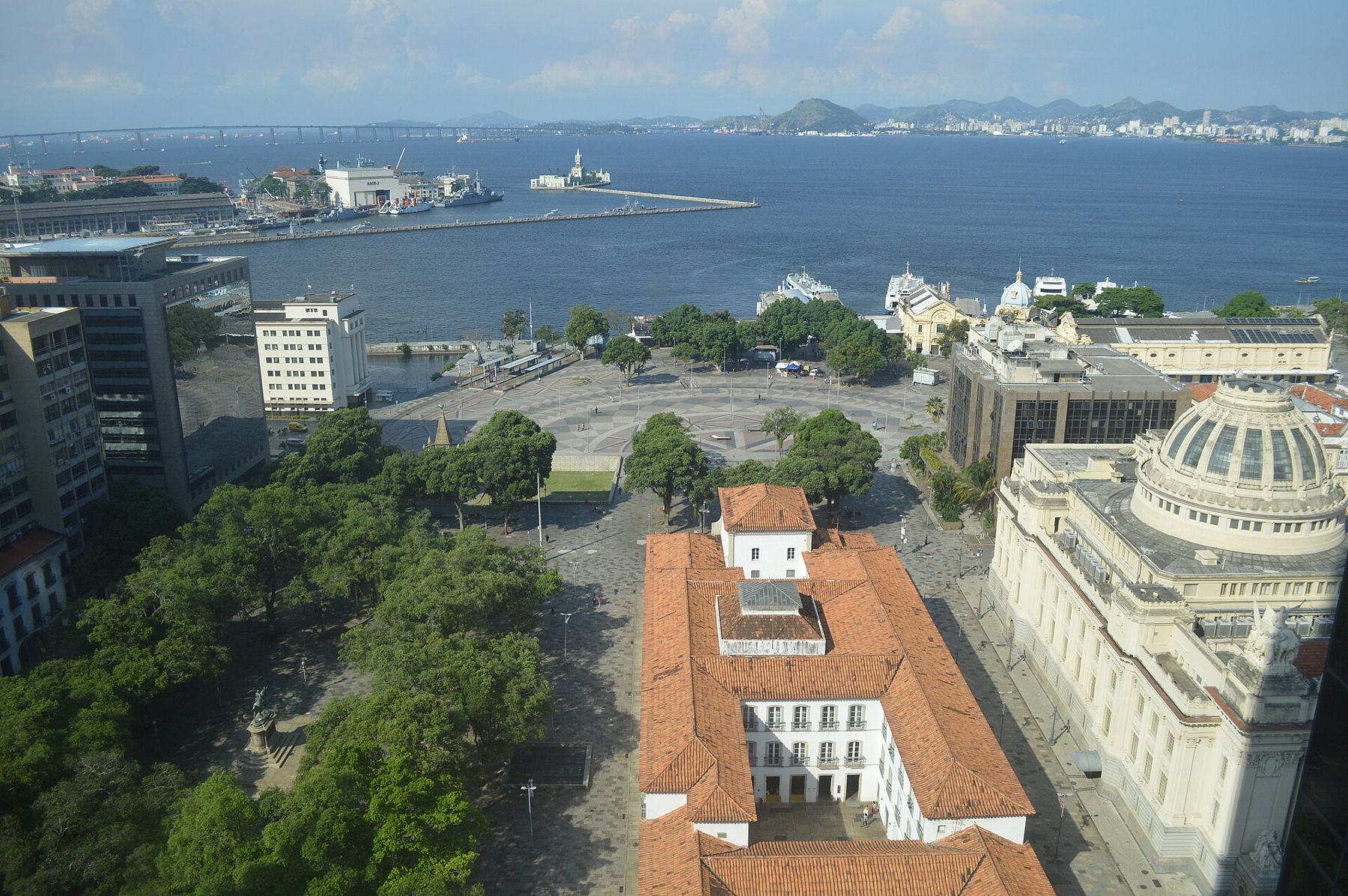
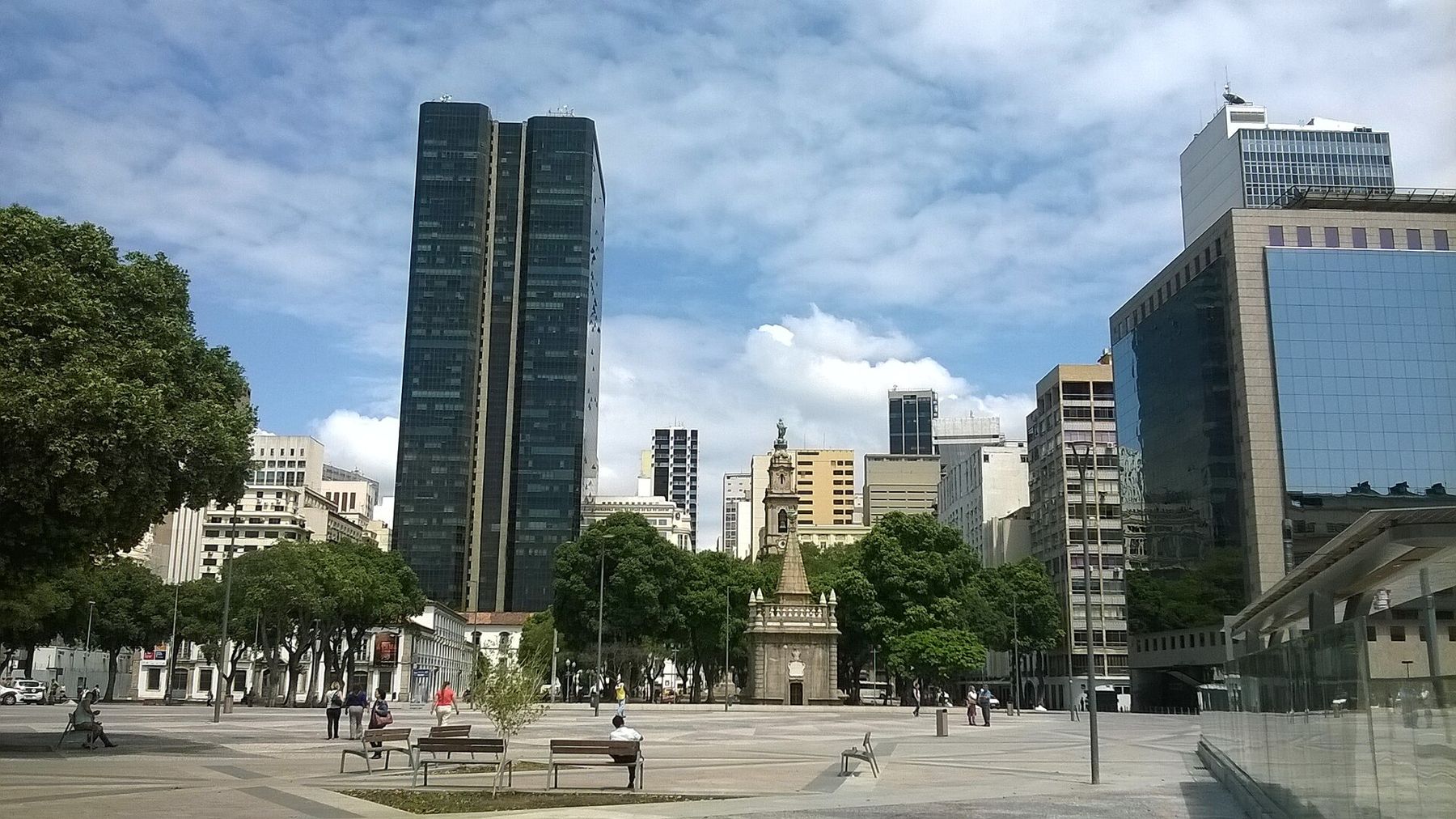
Before Rio was a city of beaches, it was a port and a capital, and its old centre still shows it. Between the ferry quay on Guanabara Bay and the great domed church of the Candelária lies a compact district of squares, palaces, churches and narrow colonial streets where the city's history was made: the arrival of the Portuguese royal court in 1808, the years as capital of an empire, and the proclamation of the republic.
Today the area is the city's business district, and that shapes how to visit it. On a weekday morning it is crowded with office workers, shops are open, churches and cultural centres welcome visitors and everything feels alive. Evenings and Sundays are a different story: shutters come down and many streets empty. Come on a working day.
Praça XV and the Paço Imperial
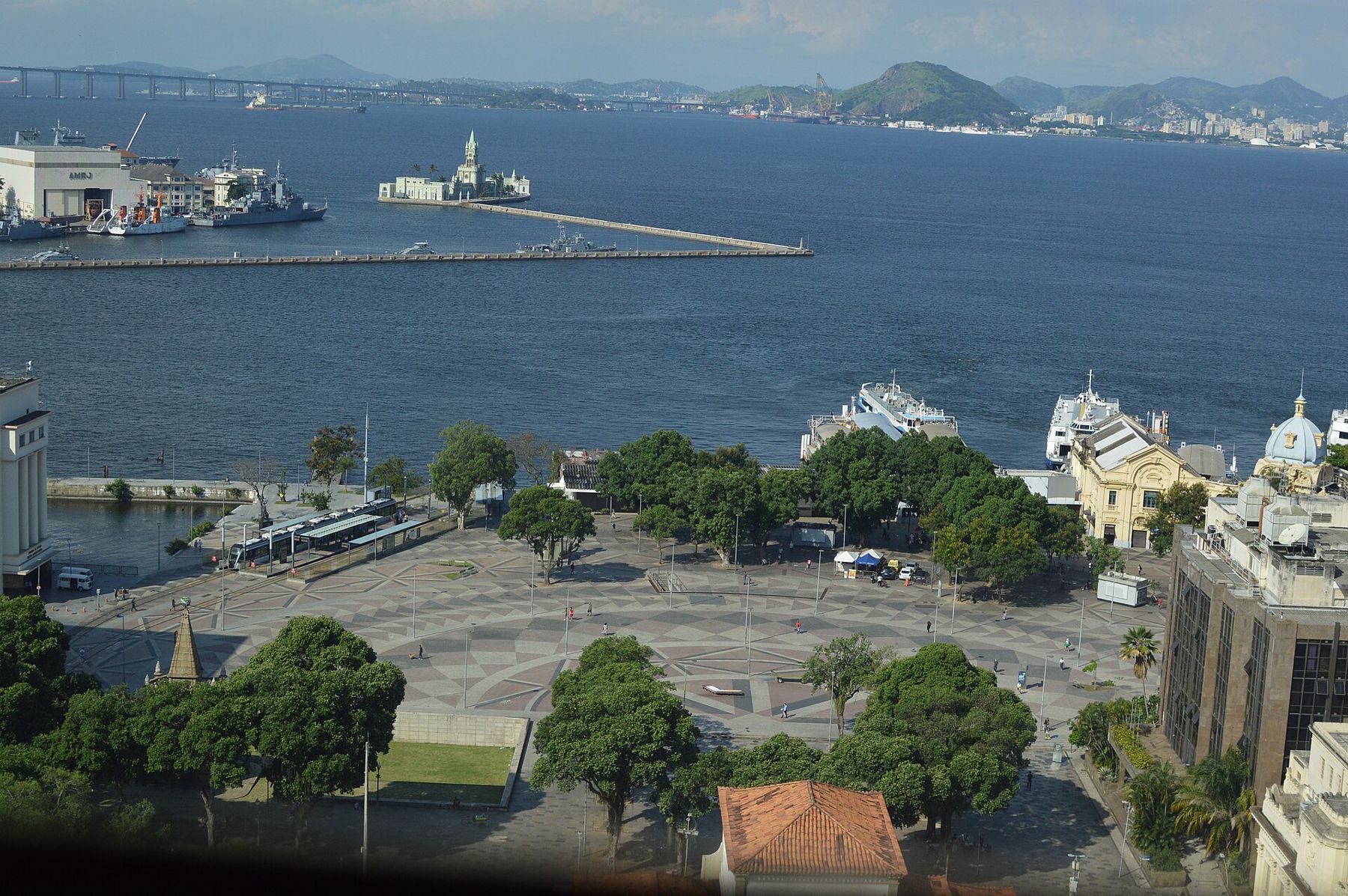
Start at Praça XV de Novembro, the broad square by the water, named for the date the republic was proclaimed in 1889. On its seaward side, ferries leave for Niterói across the bay. On its southern side stands the Paço Imperial, a long, low colonial building that served as the residence of the viceroys, then of the Portuguese royal family after they fled Napoleon's armies, and later of the emperors of Brazil.
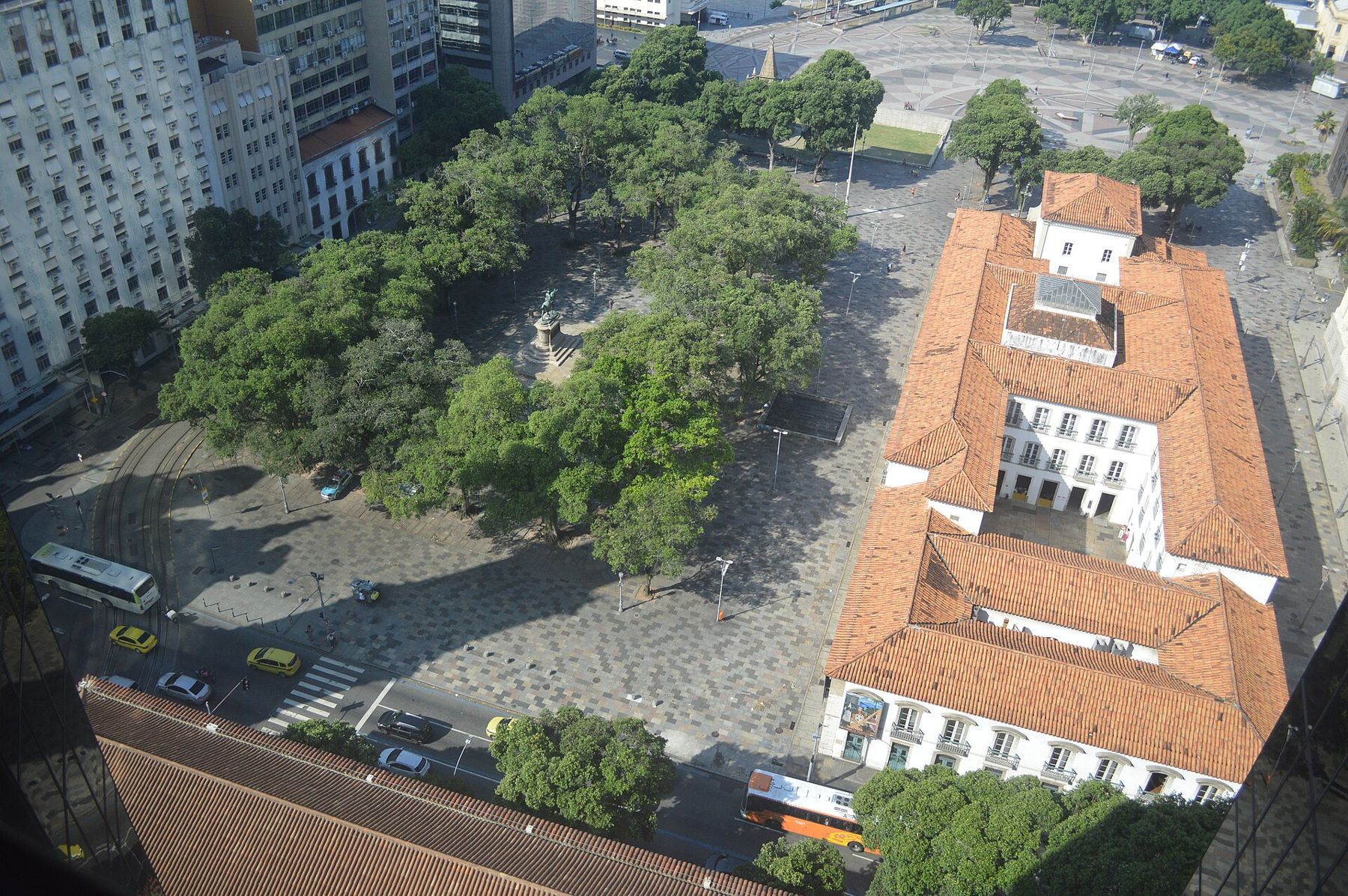
The building is now a cultural centre with changing exhibitions, a courtyard and a sense of the scale of colonial government. Entry has generally been free; check its opening days. Across the square stand the old cathedral and the church of Nossa Senhora do Carmo, which served the royal court.
Stand in the middle of the square and look at the water. The quay here was where the royal family stepped ashore in 1808, after crossing the Atlantic to escape the French invasion of Portugal, and Rio became, almost overnight, the capital of a global empire. The square has been rebuilt and reshaped many times since, most recently when the raised motorway along the waterfront was demolished, opening it back up to the bay. A fountain designed in the colonial period, the Chafariz do Mestre Valentim, still stands near the water, a reminder of the days when the square was the city's main source of fresh water for ships and households.
Arco do Teles and the old lanes
On the northern side of the square, an arched passage leads off the street. This is the Arco do Teles, the last surviving part of a building that once spanned the lane. Walk through it into Travessa do Comércio, a narrow street of colonial townhouses with balconies, now home to bars and small restaurants that fill up after office hours. In the morning it is quiet, and you can see the old buildings clearly.
From here, a short walk leads to Rua do Ouvidor, one of the oldest streets in the city, which in the nineteenth century was Rio's most fashionable shopping street. Today it is a busy pedestrian lane, but some of its older facades survive above the shop fronts.
The streets between Praça XV and the Candelária keep the tight colonial grid of the original city, narrow enough that buildings on either side shade each other. Look up above the modern shop signs: many upper floors still show tiled facades, iron balconies and carved stone doorframes. Small churches appear at corners, some with richly decorated interiors behind plain fronts, and are often open to visitors in the morning.
Candelária and the cultural centres
Walk north along the main avenue towards the Candelária, the great church that stands on its own island of space in the middle of the traffic. Begun in the eighteenth century and completed over many decades, it has a grand dome, bronze doors and a marble interior with painted panels telling the story of its founding. It remains a working church, so dress respectfully and keep quiet during services.
Come on a working day.
Around the church, several grand buildings now house cultural centres with exhibitions, cinemas and cafés. One occupies a former bank headquarters with a splendid rotunda; another, the Casa França-Brasil, was built as a customs house. Most offer free or low-cost entry and air-conditioned halls, welcome on a hot day. Check what is on before you go.
Up to São Bento
A short walk beyond the Candelária, on a small hill overlooking the port, stands the Mosteiro de São Bento, a Benedictine monastery founded in the late sixteenth century. Its plain facade gives no hint of the interior, one of the finest examples of Baroque gilded woodwork in Brazil, with every surface of the church carved and covered in gold. The monks still sing at some services. The monastery is reached from the street by a lift and a ramp; check visiting times, which follow the community's routine, and dress modestly.
Inside, take a moment to let your eyes adjust to the gold. The carving covers columns, arches, altars and ceiling in a dense pattern of leaves, angels and saints, made by artisans over generations. Photography rules vary; ask before taking pictures, and never use flash.
From the monastery's terrace, the view looks over the modern port and the bridge to Niterói, a reminder of how close the city's beginnings were to the water.
Practical notes
The distances are short, about 4 km in total if you include the climb to São Bento and some wandering, and almost all of it is flat. What takes the time is going inside: the palace, the churches and the cultural centres each deserve twenty minutes or more. Plan on a full morning, starting at nine and moving at an unhurried pace between the doors that open first, and finish with lunch among the office workers in the streets around Rua do Ouvidor.
- Go on a weekday, ideally starting around nine, when churches and centres are opening.
- Use the VLT, the modern light rail that runs through the centre, to hop between the end points.
- Dress for churches: shoulders covered and no beachwear.
- Carry little, and keep your phone out of sight in crowded streets.
The walk links naturally with the theatre district of Cinelândia to the south, described in Cinelândia: the theatre, the library and the reading room, and with the new port district and its museums to the north, in Praça Mauá and the port. Climb up to Morro da Conceição from Praça Mauá to see what the old city looked like before the avenues were cut.