
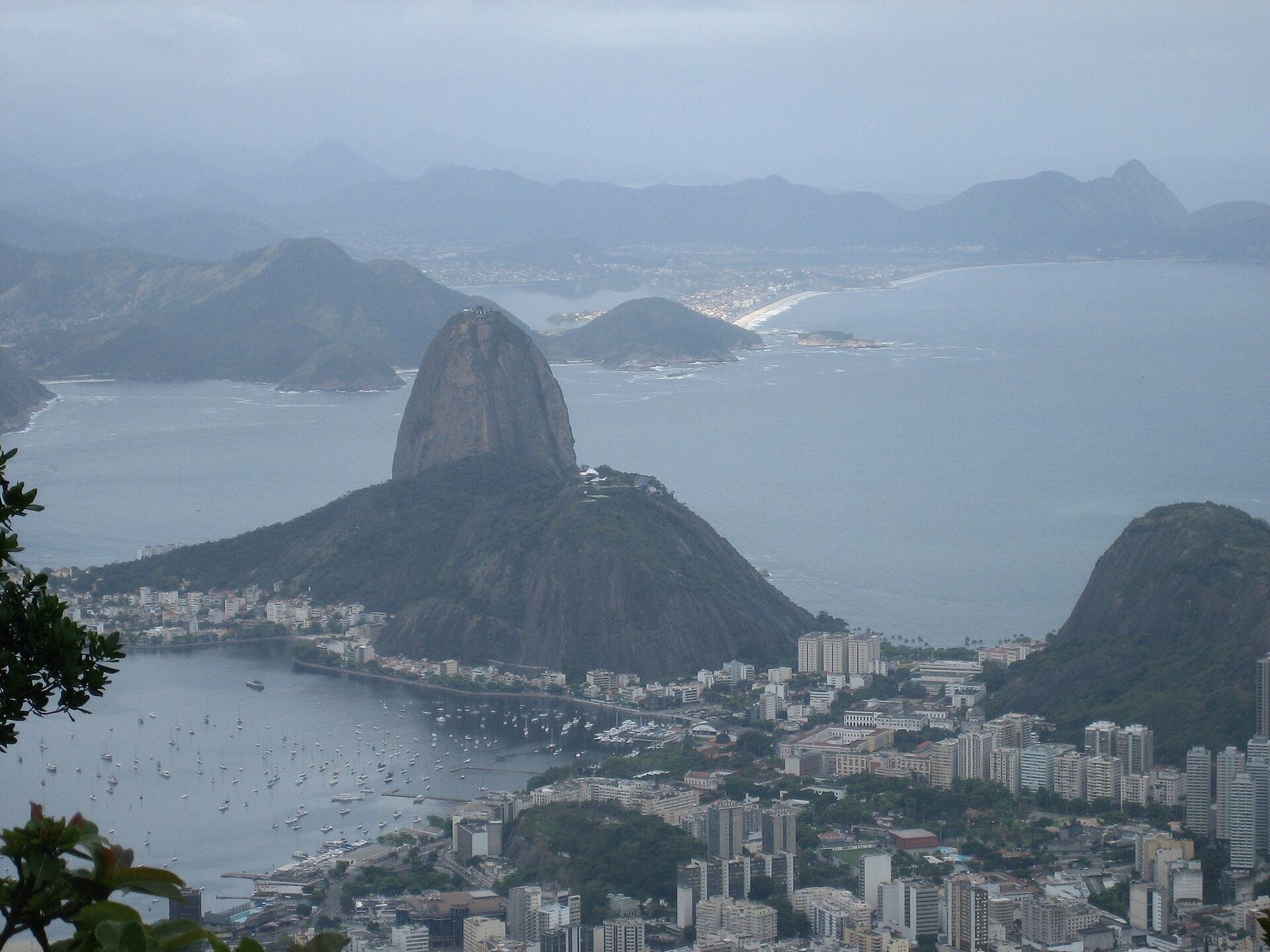
Rio's Jardim Botânico, the botanical garden, lies at the foot of the Corcovado mountain beside the Lagoa, the city's great lagoon. It was founded in 1808, soon after the Portuguese royal family arrived in Rio, to acclimatise spices and other useful plants from around the world. Two centuries later, it is one of the most beautiful gardens in the tropics: a green, shaded, peaceful place where visitors wander among palms, orchids and giant trees with the forest-covered mountain rising behind.
Next door, Parque Lage is a former private estate with a grand mansion, a courtyard pool and gardens running up into the forest. Together they make a walk of a few hours that is flat, cool and calm, a perfect antidote to the beach.
The two places are very different in feel. The botanical garden is ordered and scientific, with labelled collections and long avenues; Parque Lage is romantic and slightly wild, with its grottoes, ponds and forest paths. Seeing both on the same morning shows two sides of Rio's long love affair with plants and with the mountain that rises above them.
The royal palm avenue
Enter by the main gate on Rua Jardim Botânico. The garden's most famous feature is close by: the Aleia Barbosa Rodrigues, an avenue of royal palms, their smooth grey trunks rising like columns to a height of tens of metres. The palms are descendants of a single tree planted in the early nineteenth century, and the avenue, with the mountain beyond, is one of the iconic images of Rio.
The garden covers a large area, with paths leading in all directions. A map at the gate helps you plan. Entry is charged, and opening hours vary; check before you go.
Orchids, water and great trees
Beyond the palms, the garden opens into a series of collections and landscapes. Highlights include:
- The orchid house, with hundreds of species, many native to Brazil.
- The lake with giant water lilies, whose huge round leaves float on the water.
- The Japanese garden, with bamboo, bridges and a pond.
- The cactus and bromeliad collections, showing plants of drier and higher places.
- Giant trees such as kapok and fig, with massive buttress roots.
- Historic remains of the old gunpowder factory and an aqueduct.
Wildlife is everywhere. Toucans, parrots and hummingbirds are common, marmosets play in the trees, and if you are lucky you may see capuchin monkeys. Early mornings are best for birds.
Allow time to sit. Benches along the shaded paths and by the lake invite a pause, and the garden's calm is part of its appeal. The garden is also a working scientific institution, with a herbarium, research collections and a library; parts are open to the public, and the small museum and visitor areas explain the garden's history and its role in studying Brazil's plants.
Look out, too, for the statue of a goddess from classical myth near the palm avenue and the old gate of the gunpowder factory, both reminders of the garden's long history. Plaques name the trees, many of them planted generations ago and now giants.
Parque Lage
A short walk from the botanical garden, Parque Lage is a public park in the grounds of an early twentieth-century mansion. The house was remodelled in the 1920s for a wealthy industrialist and his wife, an opera singer. Its centrepiece is an inner courtyard with a rectangular pool surrounded by columns, with Corcovado and its statue towering directly above. It is one of the most photographed views in the city. The mansion now houses a school of visual arts and a café.
It is one of the most photographed views in the city.
The park around the house includes romantic gardens laid out in the nineteenth century, with grottoes, a small aquarium of carved rock, ponds and forest paths. It is free to enter and less crowded than the botanical garden.
The courtyard café is a popular place to sit with the view of the mountain, and the old stables and outbuildings host exhibitions and classes from the art school. On weekends the park fills with families and picnics; on weekday mornings it is quiet, and the forest paths behind the house are calm and shady. Walk up behind the mansion to the small lake and the artificial caves, built in the nineteenth century as a romantic folly, and you are already on the edge of the national park.
The trail towards Corcovado
From the back of Parque Lage, a trail climbs steeply through the forest to the top of Corcovado, where the statue of Christ the Redeemer stands. It is a demanding hike of a few hours with steep sections, rocks, roots and a short chain-assisted scramble near the top. In past years this trail has also been affected by robberies, and at times park authorities have restricted access or recommended walking only in groups or with a guide.
If you are considering it, ask at Parque Lage or with the national park about current conditions and access rules, go early, go in a group, and carry little. If in doubt, take the rack railway or road to the top instead. You can then walk the gardens at leisure and look up at the statue from the courtyard.
Practical notes
The garden and the park make an easy combination for almost anyone. Paths are mostly level and well kept, there are toilets and places to sit, and the shade makes even a hot day bearable. Families with small children, older travellers and anyone recovering from a long hike in the forest will find this the gentlest walk on the site. The total distance of about 5 km includes a loop of the botanical garden, the walk between the two gates and a wander round Parque Lage.
Photographers should note that the classic view of the palm avenue is best in soft morning light, and the courtyard pool at Parque Lage reflects the mountain best on still, clear days.
- Go in the morning: it is cooler, and the light is good for photos.
- Use repellent: mosquitoes can be present in the shade and near water.
- Plan your route: the gardens are large; allow at least two hours for the botanical garden alone.
- Combine with the lagoon: the Lagoa is just across the road.
The walk round the lagoon, described in round the Lagoa Rodrigo de Freitas, starts a short walk away. For more forest, the main sector of the national park is covered in Tijuca Forest: from the gate to the Cascatinha.