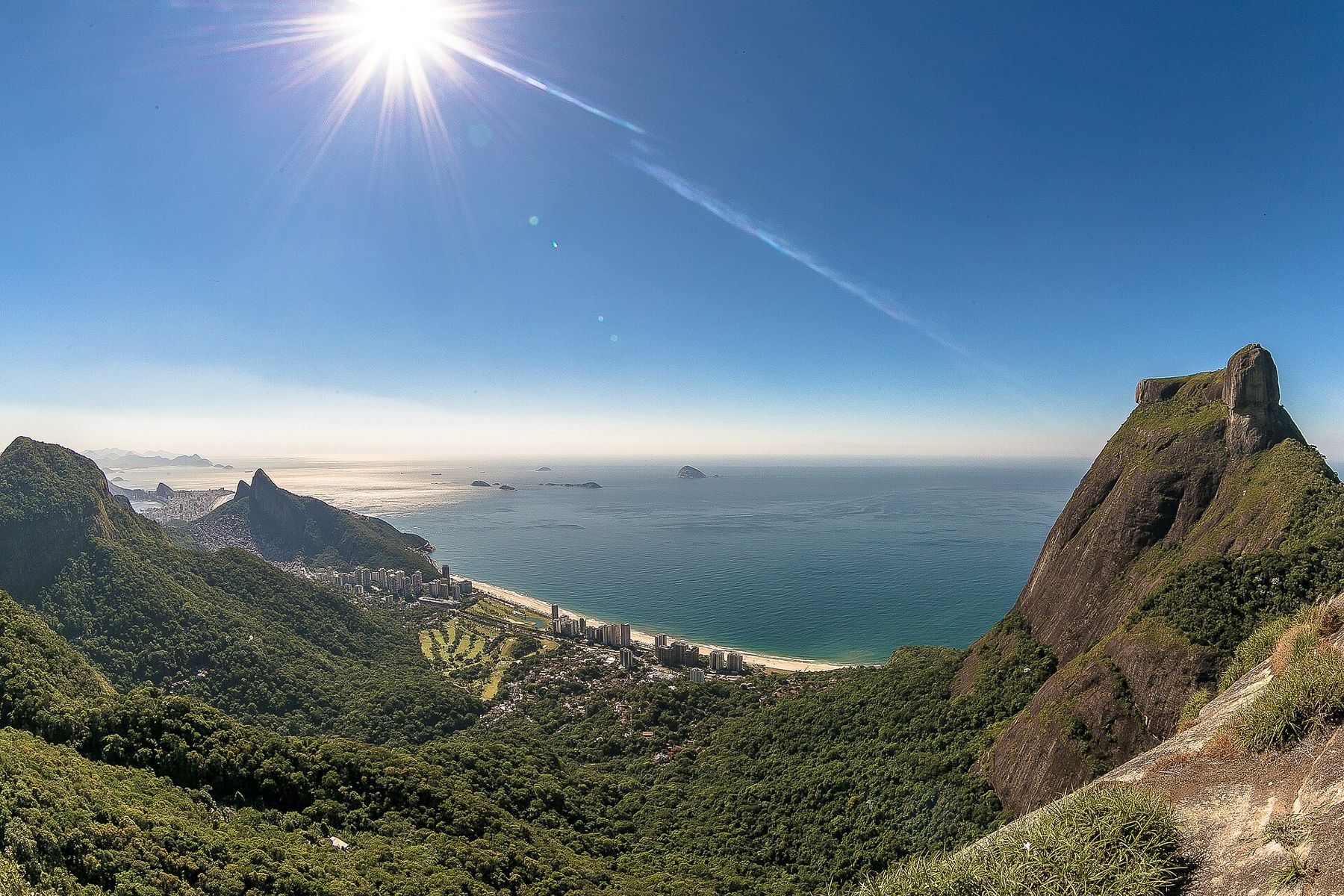
Pedra Bonita, the Beautiful Rock, is a granite dome rising above the western beaches of Rio de Janeiro, inside Parque Nacional da Tijuca. It is best known as the launch site for hang-gliders and paragliders, who run off a wooden ramp near its top and float down to the beach of São Conrado far below. For walkers, it offers one of the quickest routes in Rio to a big view: a short but steep forest trail ends on a wide expanse of bare rock with the coast spread out beneath.
Getting to the trailhead
The trail starts high on the mountain, near the road that leads to the hang-gliding ramp. The usual way to get there is by taxi or app car up the winding Estrada das Canoas, from the São Conrado side. Public transport does not reach the trailhead conveniently. Ask your driver to drop you at the start of the Pedra Bonita trail, and arrange your return in advance: there is not always a car waiting at the top.
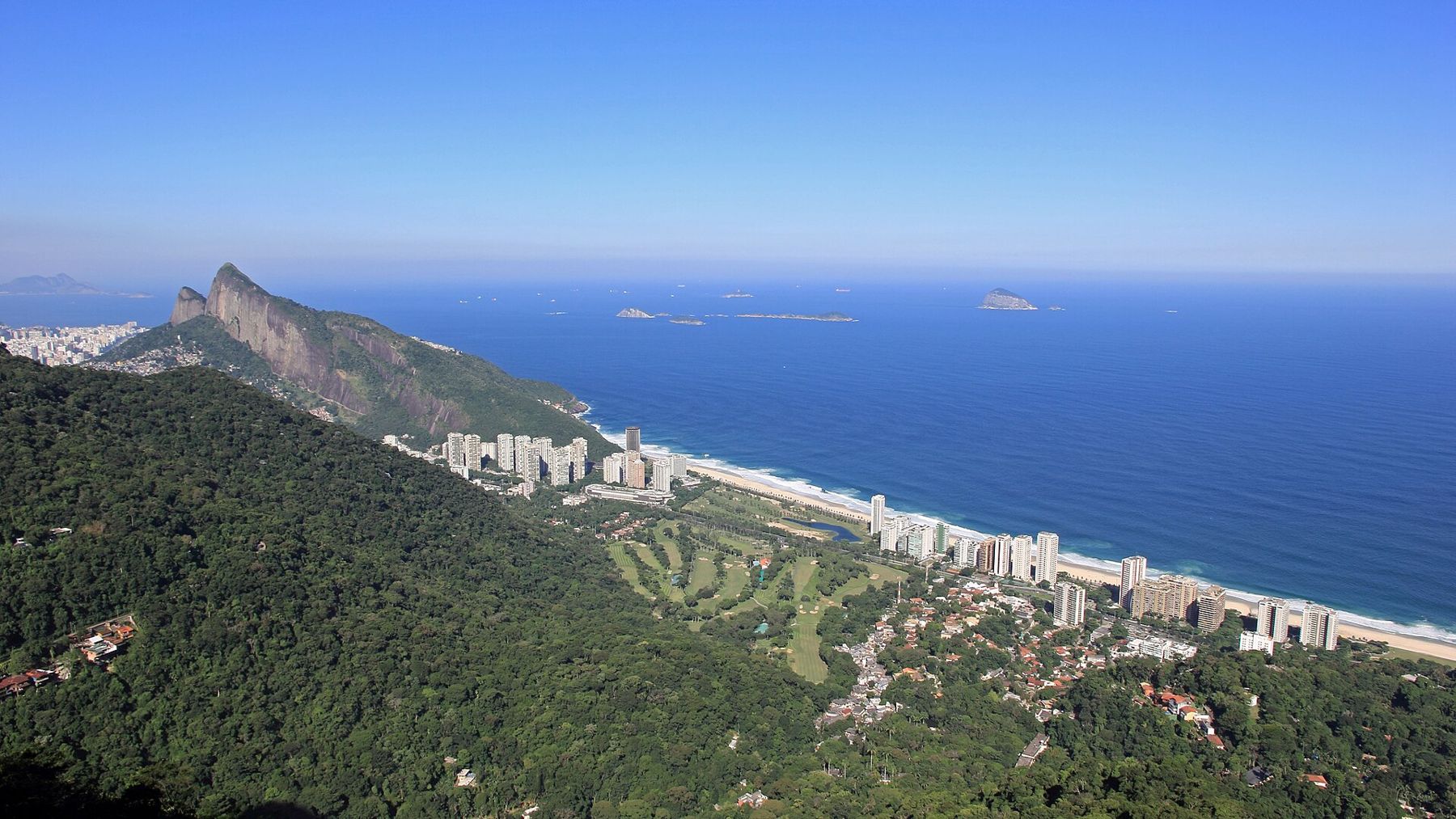
Near the trailhead, the hang-gliding ramp juts out over the forest. Even if you are not flying, it is worth watching the pilots launch, and the view from the ramp itself is impressive.
Watching the launches is a show in itself. Pilots lay out their wings on the ramp, wait for the right breeze rising up the slope, then run and lift off into the air, turning out over the forest towards the sea. Tandem flights with qualified instructors take passengers down to the beach in good weather; that is a commercial activity outside the scope of this guide, but the spectacle is free to watch.
The trail
The trail climbs through Atlantic forest for about a kilometre. It is a dirt path with roots, rocks and steep sections, but it is short: most walkers take 30 to 45 minutes to reach the top. The forest gives shade and the chance to see birds, lizards and small monkeys. Park signs mark the way.
The trail ends where the trees give way to bare granite, and you walk out onto the rounded summit of Pedra Bonita. The rock surface is wide and fairly gentle at the top, but it drops away steeply at the edges. Keep well back from the drops, especially in wind, and be careful on the rock when it is wet.
The view
From the top, the view is one of the finest in Rio. To one side, Pedra da Gávea, an enormous block of granite with a flat top, looms so close it seems you could touch it. Below, the beach of São Conrado curves along the sea, with the hang-gliders landing on the sand. In the other direction, the long beaches of Barra da Tijuca stretch away to the west, and on a clear day the islands offshore stand out on the horizon. Inland, the forested ridges of the Tijuca massif roll away.
On a clear day you can follow the coastline far to the west, past the lagoons and beaches of the western zone, towards mountains that fade into the haze. Sunrise and late afternoon bring the best light. Many people come for the sunset; if you do, bring a torch for the walk down and arrange your ride in advance.
Take time on the summit. The rock is broad enough to find your own spot, and many people sit for an hour or more, watching the hang-gliders circle below, the waves breaking on São Conrado and the changing light on Pedra da Gávea. The breeze at the top is usually welcome after the climb, but it can be strong; hold on to hats and keep loose items in your bag.
Pedra da Gávea, in brief
The neighbouring Pedra da Gávea, at over 800 m, is one of the largest granite blocks rising directly from the sea anywhere in the world. Its climb is a far more serious undertaking than Pedra Bonita, with a long steep trail and a section of rock climbing near the top that requires experience and equipment. Many people take a guide. It is not part of this walk; admiring it from Pedra Bonita is the easy way to appreciate it.
Practical notes
- Go on a clear day: cloud can hide the view completely.
- Start early on weekends to avoid the busiest times.
- Bring water and sun protection; the summit is exposed.
- Wear shoes with grip for the trail and the rock.
- Arrange transport both ways before you set off, and keep the driver's number handy.
- Bring a light layer: the summit breeze can feel cool after the climb.
Safety
The summit rock has no railings, and the drops at its edges are long; children need close watching, and nobody should go near the edge for a photograph. The trail is in the national park and well used, especially on weekends. Like other trails in the city, it has seen occasional incidents, so go in daylight, preferably in company, and keep valuables out of sight. Ask park staff or your accommodation about current conditions. Do not attempt to climb Pedra da Gávea without experience and proper preparation.
For a longer forest walk, the main sector of the park, with its waterfall and chapel, is described in Tijuca Forest: from the gate to the Cascatinha. For the city's highest summit, see Pico da Tijuca.