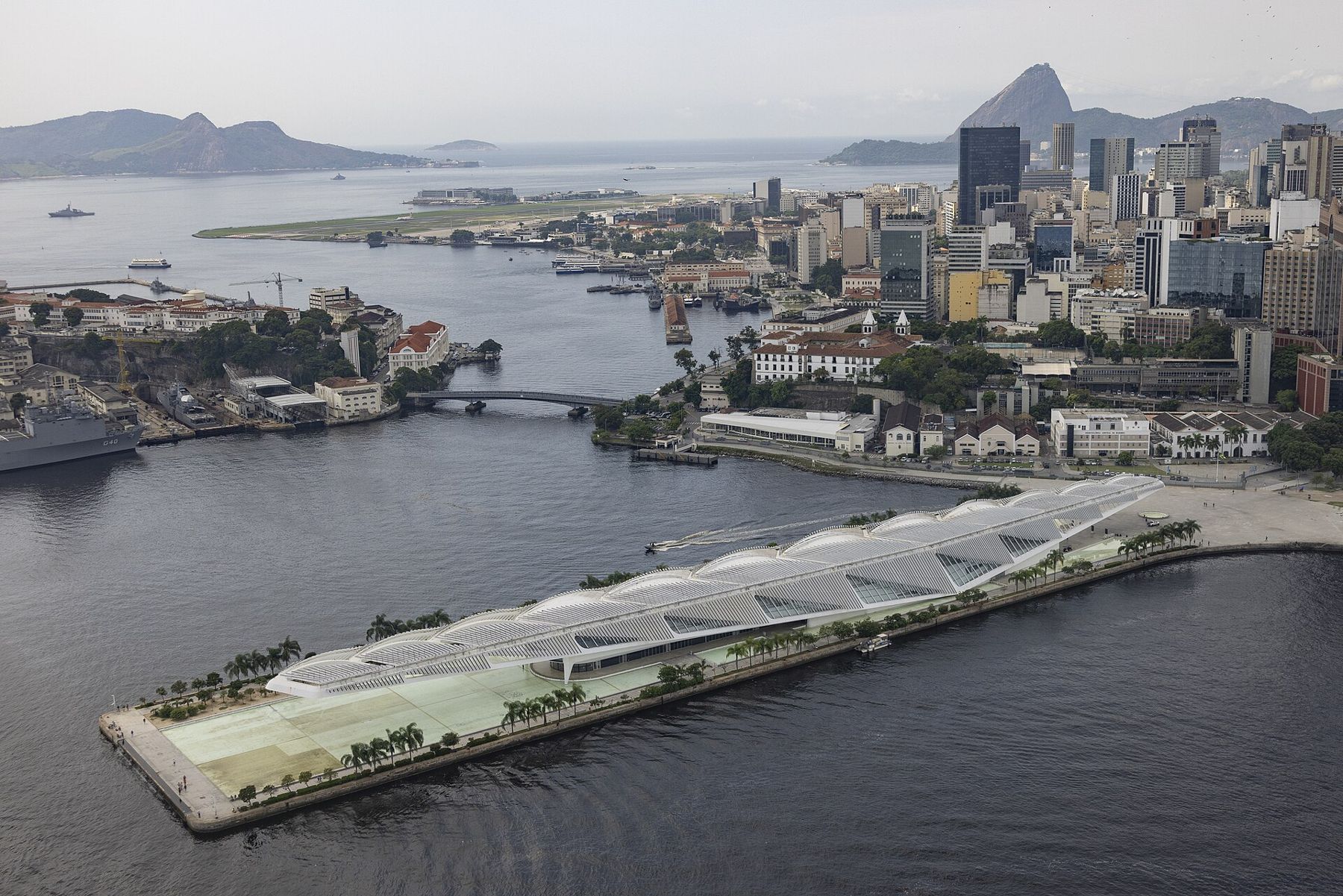
For most of the twentieth century, Rio's port district was a place visitors avoided: warehouses, a raised motorway along the waterfront and decaying streets. In the years before the city hosted the 2016 Olympic Games, it was remade. The motorway came down, a light rail line was built, and the waterfront became a wide promenade lined with new museums, restored warehouses and giant murals.
The renewal also uncovered something the city had buried: the stones of the Valongo Wharf, the landing place of hundreds of thousands of enslaved Africans. A walk through the port today joins the new city and the old in a way few places can.
Praça Mauá and two museums
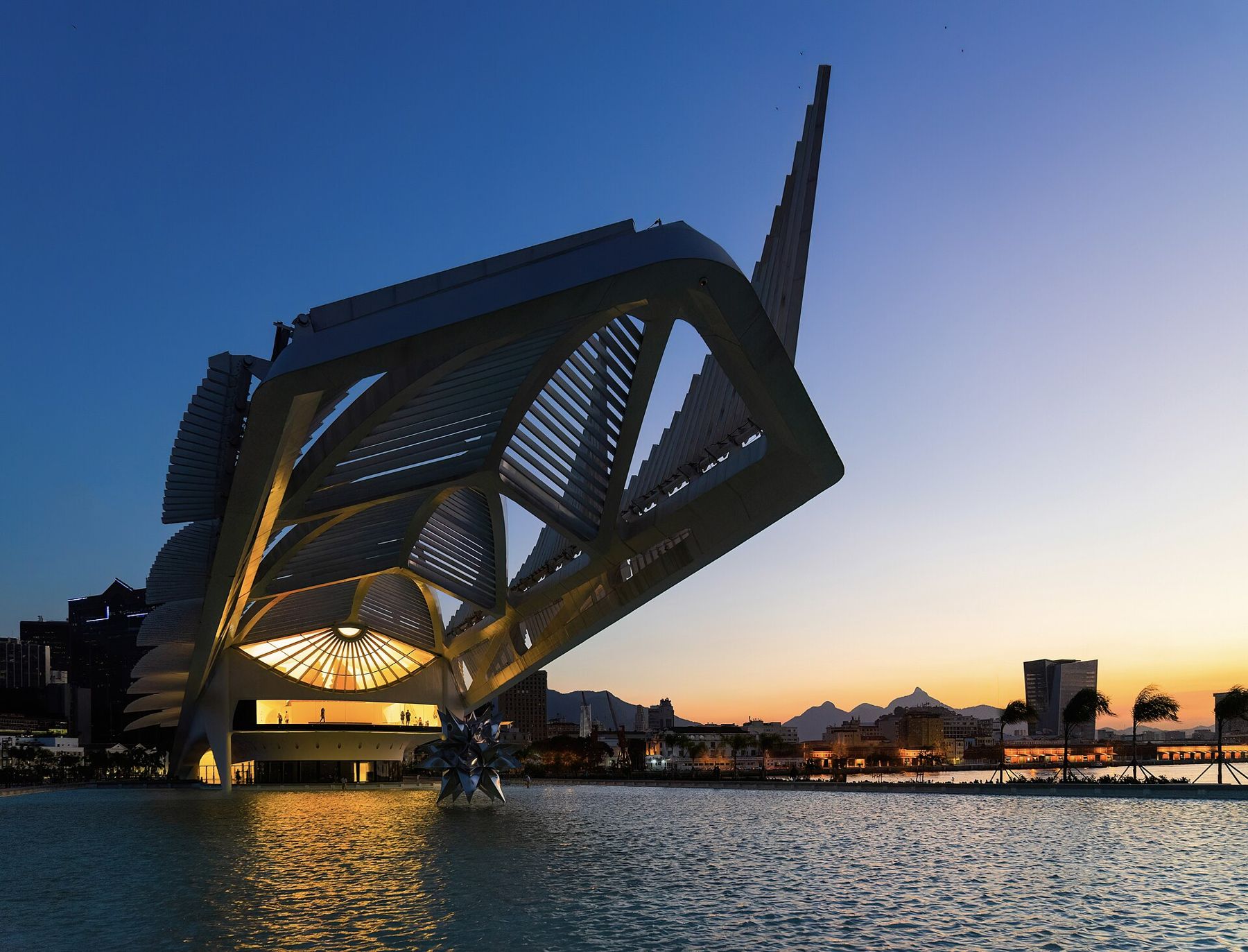
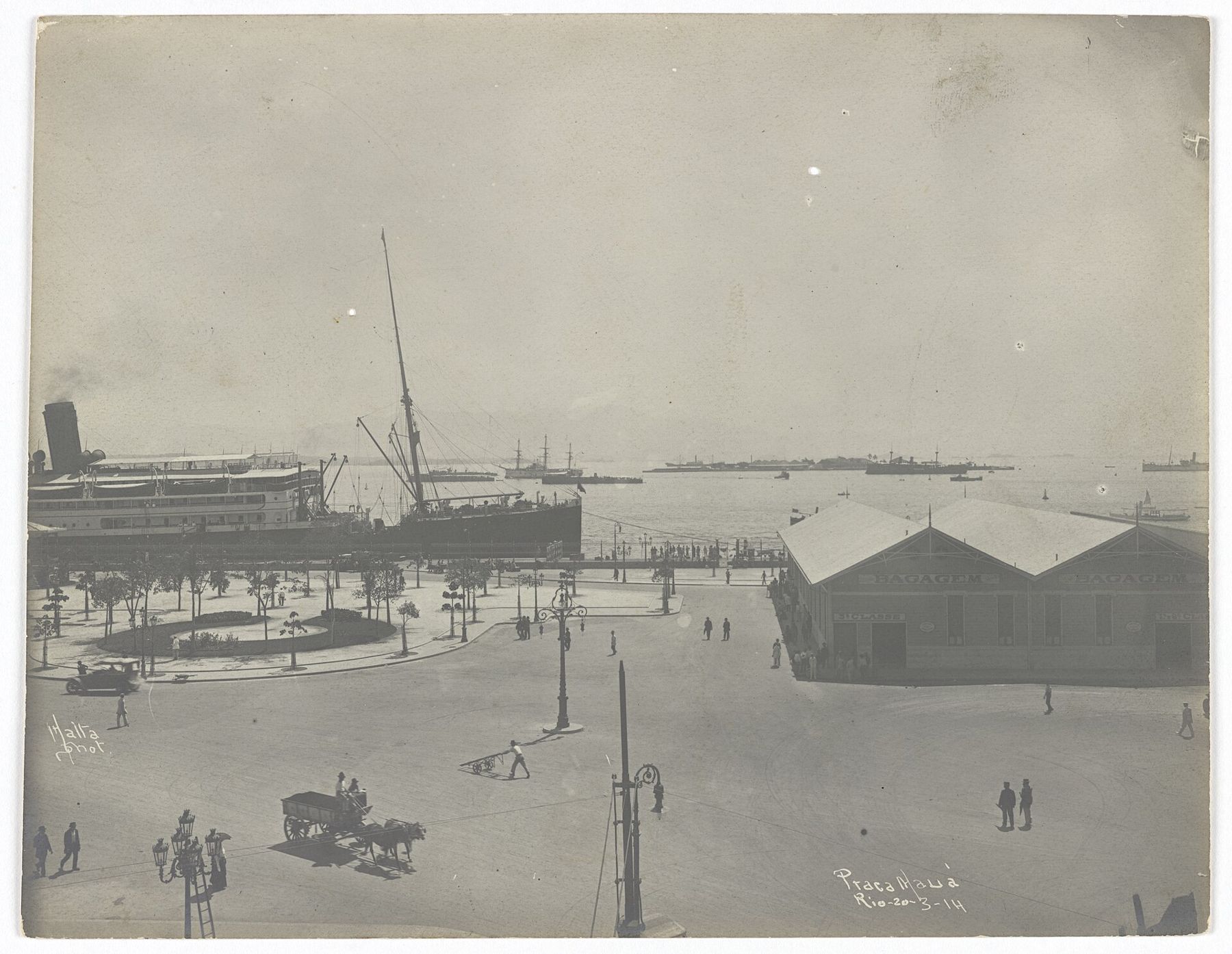
Start at Praça Mauá, the large open square at the southern end of the waterfront, reached by the VLT. On its waterside, a long white building with a cantilevered roof stretches out into the bay. This is the Museu do Amanhã, the Museum of Tomorrow, opened in 2015, with exhibitions about the future of the planet, science and society. Its design, with a spine of moving fins, is as much of a draw as its contents.
On the opposite side of the square, the Museu de Arte do Rio occupies two joined buildings, an old palace and a modernist former bus station, linked by a wavy roof. Its exhibitions focus on the city's art, history and people, and its rooftop terrace gives a fine view over the square, the port and Morro da Conceição. Both museums close on some weekdays and charge for entry; check opening days and any free-entry days before you go.
Allow time for at least one of the two museums. The Museum of Tomorrow's main exhibition takes visitors through the origins of the universe, life on Earth and the choices facing humanity in the coming decades, with large projections and interactive displays. The art museum works more like a portrait of Rio itself, with shows that often focus on the people, neighbourhoods, music and visual culture of the city. Between them they make a strong case for the new port as a cultural district, not just a redevelopment.
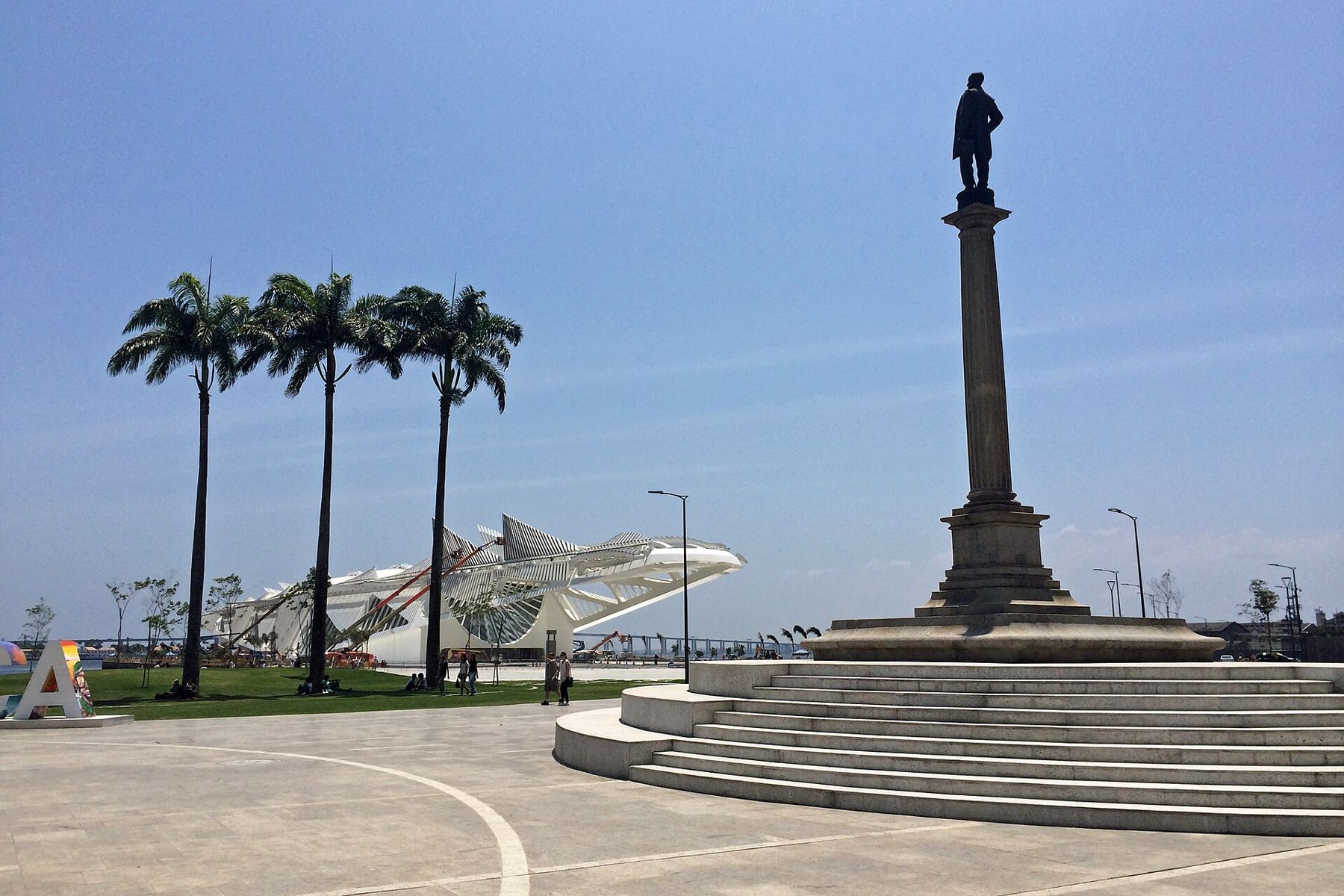
The square itself is worth pausing in. Its centrepiece is a statue of a nineteenth-century industrialist, and around it the old port authority building and the modern tower blocks show the different eras of the waterfront. Look out to sea for the naval ships often moored at the base on the island opposite.
Along the Boulevard
From the square, the Boulevard Olímpico runs north along the waterfront, a wide, open promenade for walking and cycling. Old warehouses along it have been restored, and the views out over the bay take in ships, cranes and the bridge to Niterói.
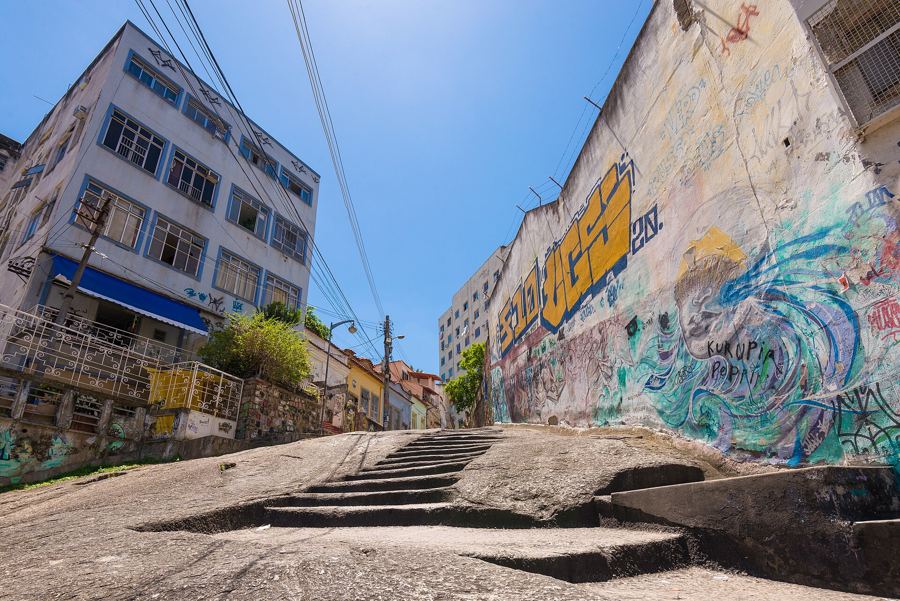
The Boulevard is also known for its murals. Huge painted walls line parts of the route, including a vast work showing faces from different continents, painted for the Olympic Games. More murals by many artists appear on warehouses and walls nearby, and new ones are added.
Along the way, restored warehouses now house exhibition spaces, an aquarium and venues for events, and the old railway lines that once served the docks have been turned into public space. The contrast between the giant cranes of the working port to the north and the open promenade is part of the view.
The VLT runs close to the Boulevard, so you can walk one way and ride back. On weekends the promenade is busy with families, cyclists and street performers; weekday mornings are calmer.
On the way, the square in front of the old warehouses fills on weekends with food stalls and families, and the breeze off the bay makes it one of the most pleasant places in the centre to sit.
The Valongo Wharf
Inland from the Boulevard, a short walk from Praça Mauá, lies the Cais do Valongo, the Valongo Wharf. In the late eighteenth and early nineteenth centuries this was the main landing place in the Americas for enslaved Africans: historians estimate that hundreds of thousands passed through it. The wharf was paved over in the nineteenth century, built on again and forgotten, until excavations during the port works revealed its stones once more in 2011.
In 2017, the Valongo Wharf was inscribed as a UNESCO World Heritage site, recognised as the most important physical trace of the arrival of enslaved Africans in the Americas. Today the excavated area is open to view from the street, with explanatory panels. It is a quiet, sobering place. Take your time, read the signs and remember what happened here.
It is a quiet, sobering place.
Excavations at the wharf found not only the paving stones but also thousands of objects belonging to the Africans who passed through: amulets, beads, pipes, buttons and items of religious significance. Some are displayed in local cultural centres. The site has become a gathering place for Afro-Brazilian communities, who hold ceremonies of remembrance here, including an annual washing of the stones.
The nearby streets of Saúde and Gamboa, and the rock of Pedra do Sal, carry the story forward into Little Africa and the birth of samba; see Morro da Conceição and Pedra do Sal.
Practical notes
Distances here are easy, and the ground is level from start to finish. The whole route, from Praça Mauá up the Boulevard, back past the wharf and on to Pedra do Sal, covers about 4 km on flat ground. With one museum visit and time at the wharf, it fills half a day. The area has plenty of places to sit, and the waterfront breeze helps on hot days, but the sun on the open promenade is strong at midday.
If you have children with you, the open promenade, the giant murals and the science exhibits at the Museum of Tomorrow make this one of the more family-friendly walks in the city, with level paths suitable for buggies along most of the route.
- Morning is best: cooler, quieter and with good light over the water.
- Shade is limited on the Boulevard; bring a hat and water.
- Use the VLT to move between the square, the wharf area and the old centre.
- Check museum days: both museums close on at least one weekday, and some days are free and busier.
- Stay on the main routes and avoid empty inland streets, particularly after dark.
From Praça Mauá, the old centre is within easy reach: the VLT runs south to Praça XV, the starting point of Centro by day. Together with the climb over Morro da Conceição, the port district makes a full day of walking without ever touching a beach.