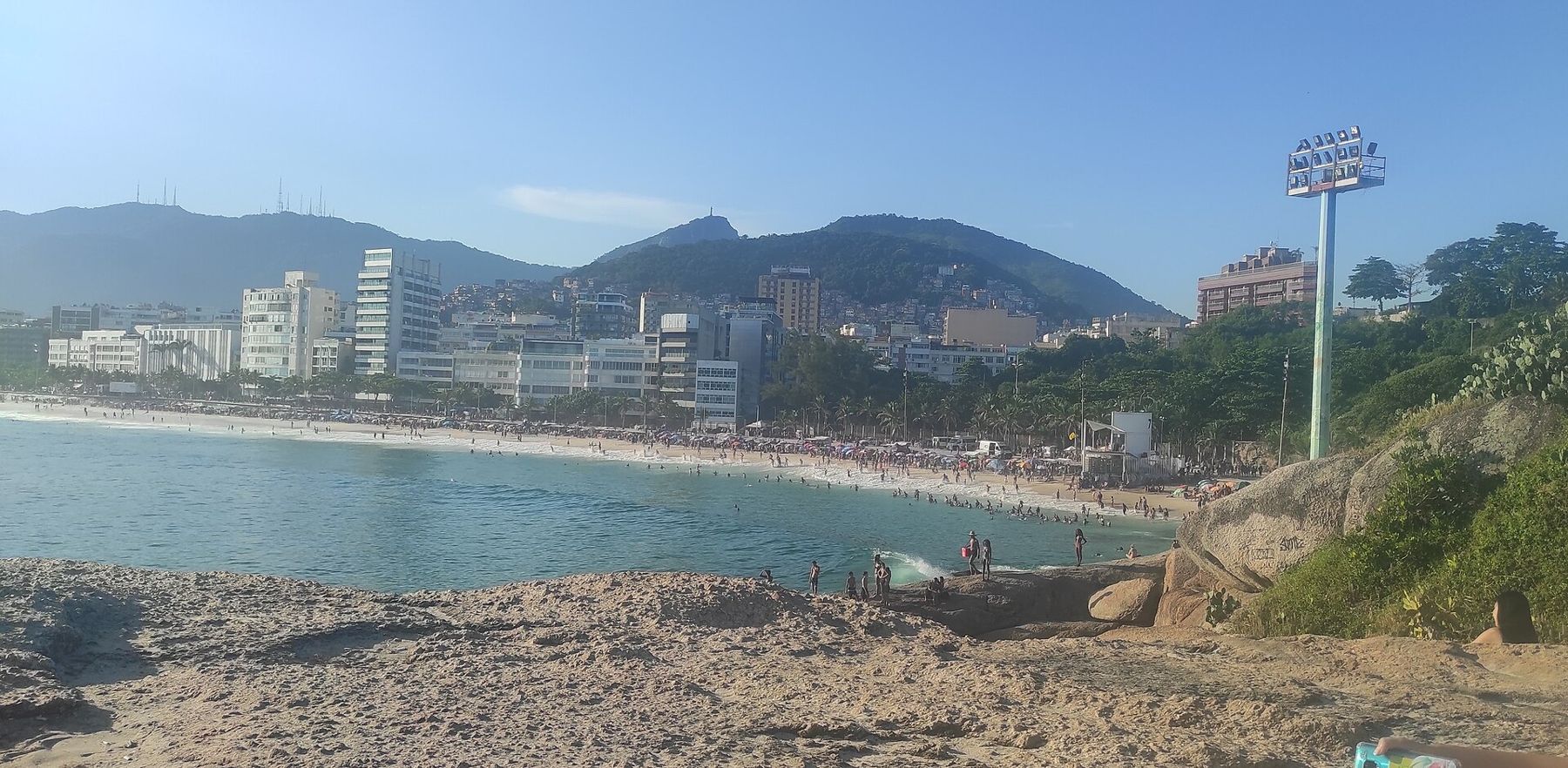
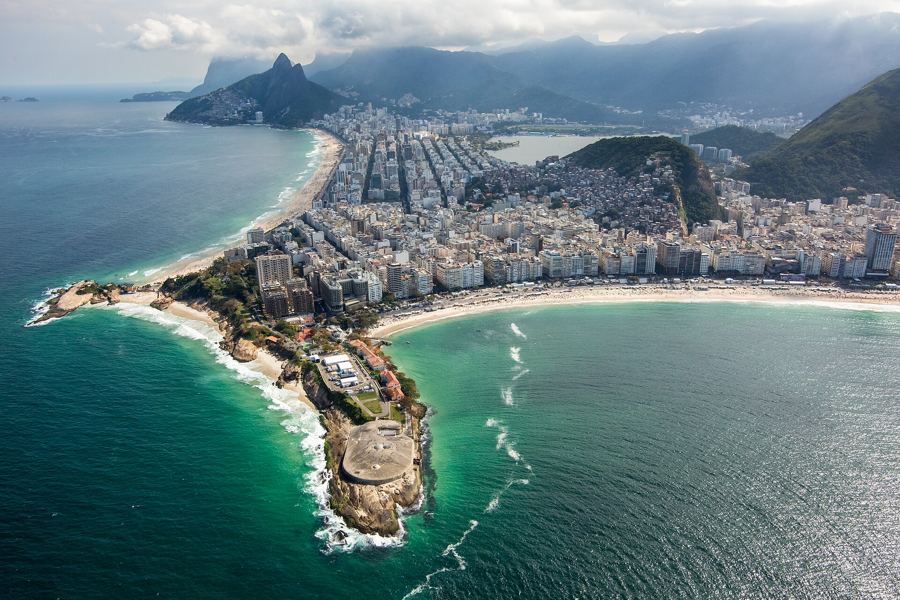
Where Copacabana ends and Ipanema begins, a rocky headland called Arpoador pushes out into the Atlantic. It is a small place, a few blocks of streets, a park and a smooth granite outcrop, but it holds one of Rio's best-loved rituals. On clear evenings, hundreds of people climb onto the rock to watch the sun set behind the twin peaks of Dois Irmãos at the far end of Ipanema beach. When the sun finally disappears, the crowd applauds.
This walk times itself around that moment: a short approach to the rock in the late afternoon, the sunset, and then a stroll along Ipanema as the lights come on.
Arpoador also has a long history as a surfing spot. The waves that break off the point have drawn surfers for generations, and on a good swell you can watch them ride from the rocks. The name itself recalls an older use of the headland: it comes from the harpooners who once watched for whales from the rock, in the days when whales were hunted in the waters off Rio.
Getting to Arpoador
Arpoador lies at the corner where the southern end of Copacabana meets the eastern end of Ipanema. From Copacabana, you can walk around the fort point via a path or through the streets. From the metro station at General Osório in Ipanema, it is a short walk to the beach. Arrive at least an hour before sunset to explore and find a spot on the rock.
Praça Garota de Ipanema
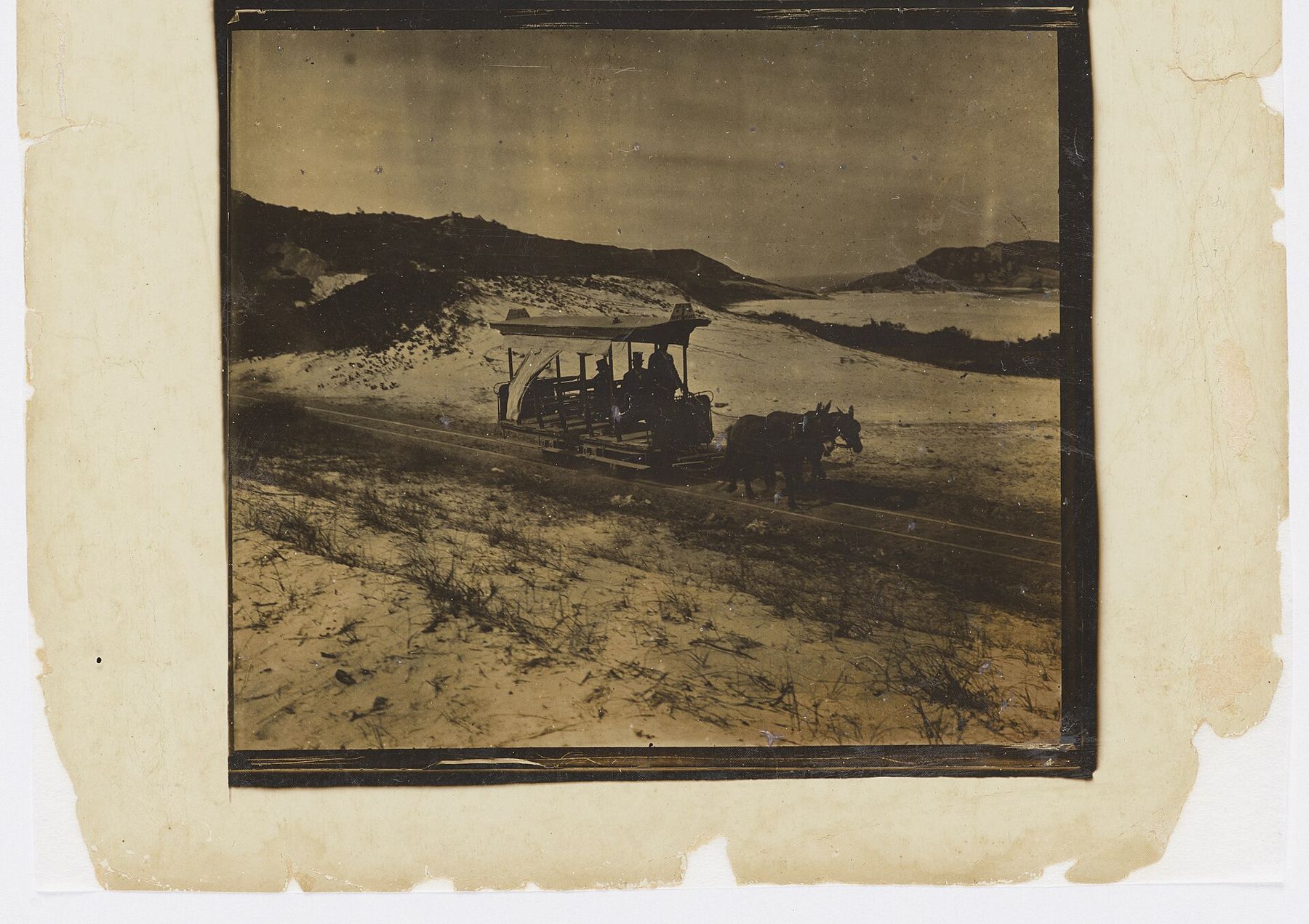
Near the rock, a small park is named after the famous bossa nova song "Girl from Ipanema", written in the early 1960s. It is a pleasant green space with views over the sea and a good place to pause before climbing onto the rock. The song made Ipanema known around the world, and the neighbourhood still carries something of the easygoing style it described.
On the rock
The Pedra do Arpoador is a broad, rounded granite outcrop that slopes down to the sea. A short scramble up its smooth surface brings you to the top, where the view opens along the full length of Ipanema and Leblon to the two peaks of Dois Irmãos, the Two Brothers, with the bulk of Pedra da Gávea behind. On the other side, the waves break against the rocks, and surfers ride the swells that wrap around the point.
The rock is smooth and can be slippery, especially if wet or sandy. Wear shoes with grip, keep well back from the edges where the rock drops to the sea, and take care in the crowd when moving around.
The sunset and the applause
As the sun drops towards the peaks, the crowd grows: couples, families, groups of friends, street vendors selling drinks. The light turns gold and then orange over the sea, and the outline of Dois Irmãos darkens. When the sun disappears below the horizon, the crowd claps and cheers, as if thanking it for the show. It is one of those moments that feels both very Rio and very human.
The exact position of the sunset changes through the year. In the southern winter months, roughly May to August, the sun sets close to Dois Irmãos and the classic view is at its best. At other times it sets further out over the sea, still beautiful but with a different composition.
After the sun has gone, the sky often puts on a second show. The clouds over the sea turn pink and purple, the outline of the mountains sharpens, and the lights of Ipanema and Leblon come on along the curve of the beach. Stay a little longer if you can; many people leave at the moment of the applause and miss the best colours. Take care getting down from the rock in the fading light.
Along Ipanema afterwards
After the sunset, walk west along the promenade of Ipanema as dusk falls. Like Copacabana, the beach is divided by lifeguard posts, and each stretch has its own crowd and atmosphere. The wave-patterned pavement continues, and the beach volleyball games often carry on under floodlights.
Ipanema's promenade is a little calmer than Copacabana's, with more residents than visitors in the evenings. Along the way, you pass the posts that serve as meeting points, each with its own crowd and its own reputation, and the streets running inland lead into a grid of shops and cafés. The beach is particularly lively on weekends, when the road along the front closes to traffic during the day.
After about two kilometres, a canal marks the boundary between Ipanema and Leblon, a quieter, more residential neighbourhood. From here, you can head inland to the Lagoa or catch a taxi or the metro back.
Practical notes
- Arrive early for a good spot on the rock, at least an hour before sunset.
- Keep belongings close in the crowd; carry very little.
- Watch your footing on the rock, especially going down in the dusk.
- Check the weather: cloud on the horizon can spoil the sunset, though a little cloud often makes the colours richer.
- Walk back along busy, lit streets after dark, or take a taxi.
This walk links naturally with the Copacabana promenade, which ends at the fort just around the corner. For a different evening, the Lagoa behind Ipanema is lovely in the last light too.