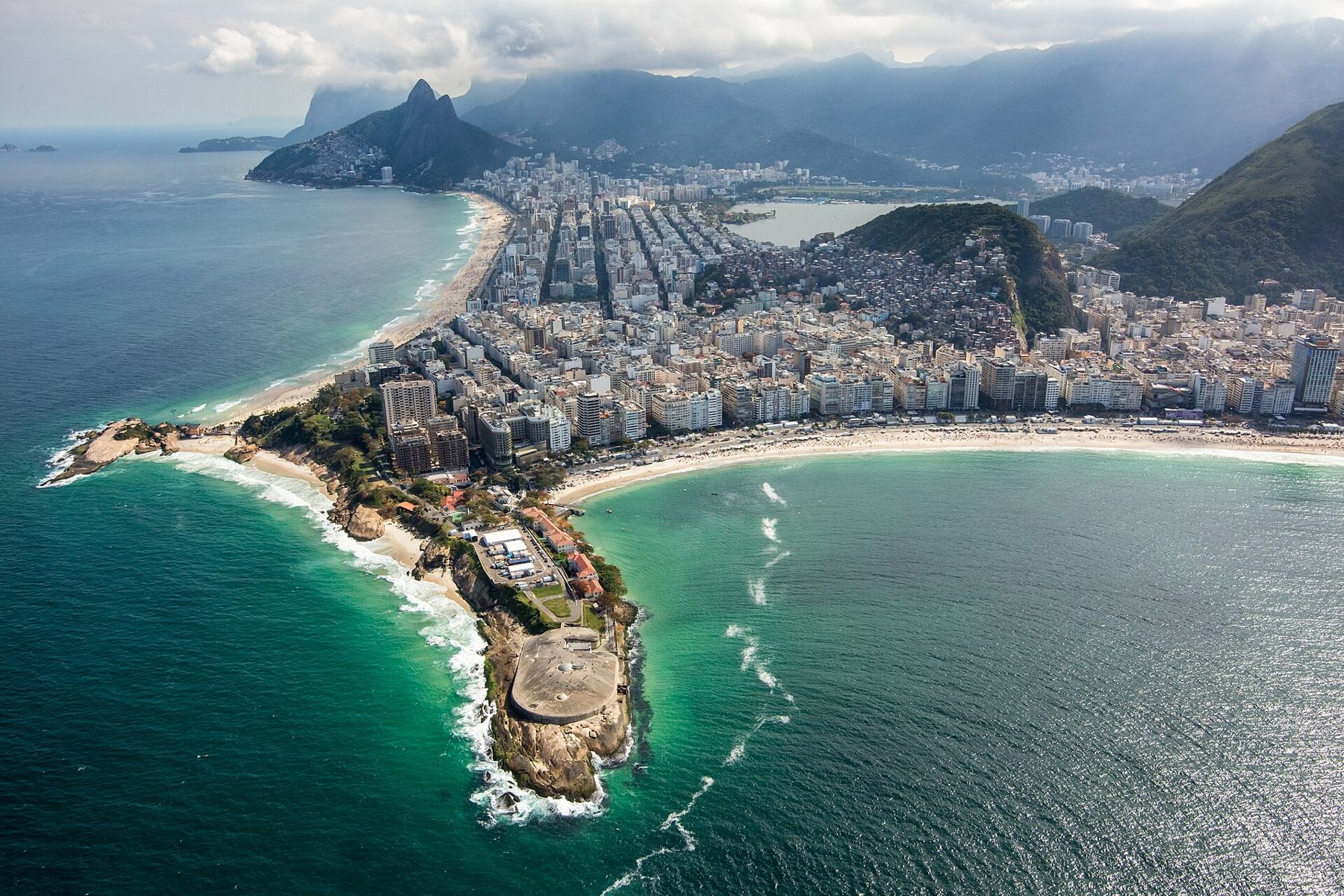
Copacabana needs no introduction, but walking it properly does. The beach runs for about four kilometres in a long, gentle curve between two rocky headlands, backed by a wall of apartment buildings and the busy Avenida Atlântica. Between the road and the sand runs the Calçadão, the promenade, paved in black and white stones laid in a pattern of rolling waves that has become a symbol of Rio itself.
Walking from one end to the other, from Leme in the north to the old fort at the southern point, takes a couple of hours at a relaxed pace with stops. It is flat, easy, and endlessly entertaining.
The wave pavement
The pattern of the Calçadão comes from Portugal. Portuguese stonemasons had long paved city squares with small black and white limestone and basalt cubes set in patterns, a technique called calçada portuguesa, and Lisbon's Rossio square was famous for a wave design representing the sea. Rio adopted the idea early in the twentieth century, and Copacabana's promenade was paved with waves.
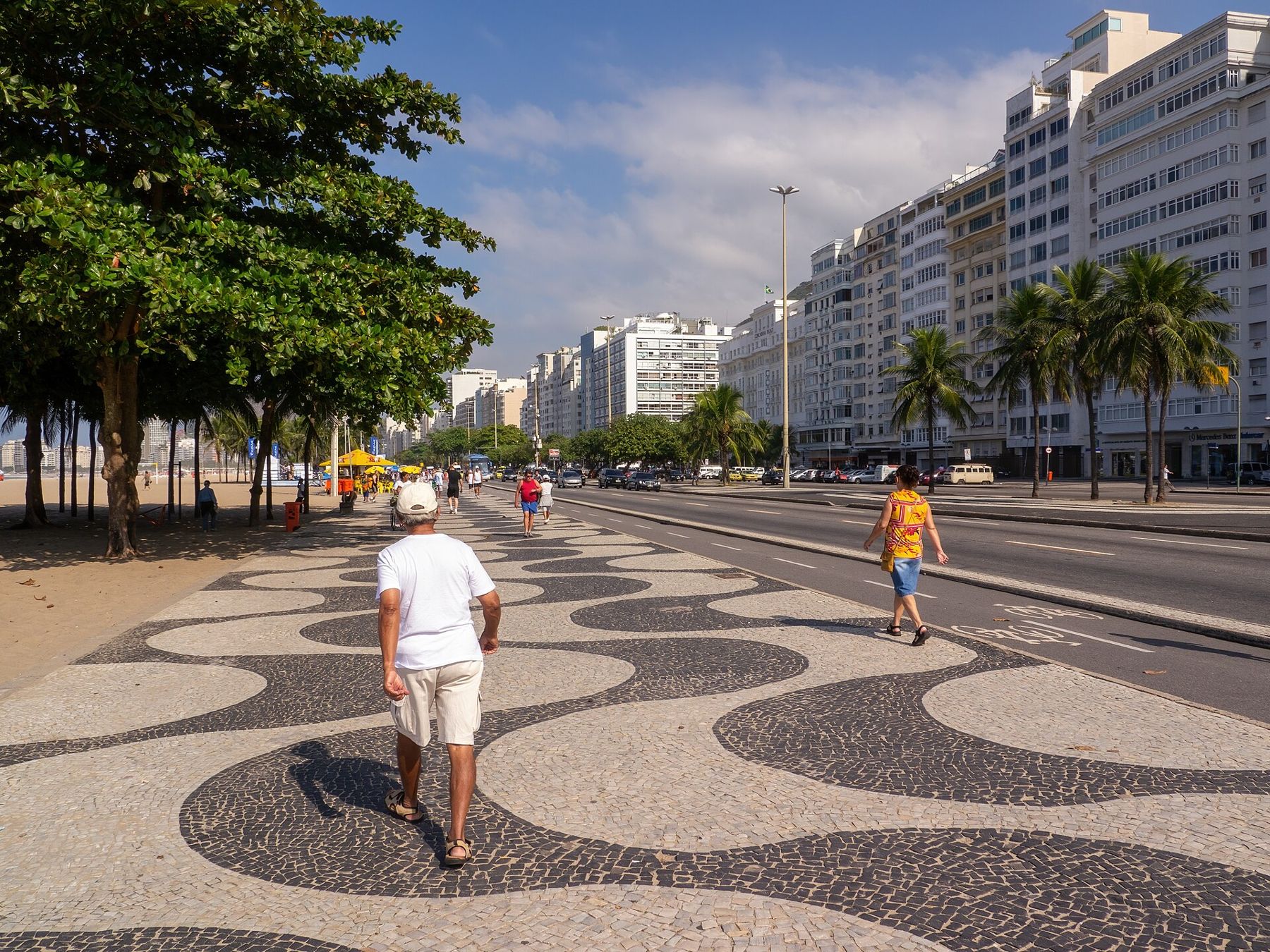
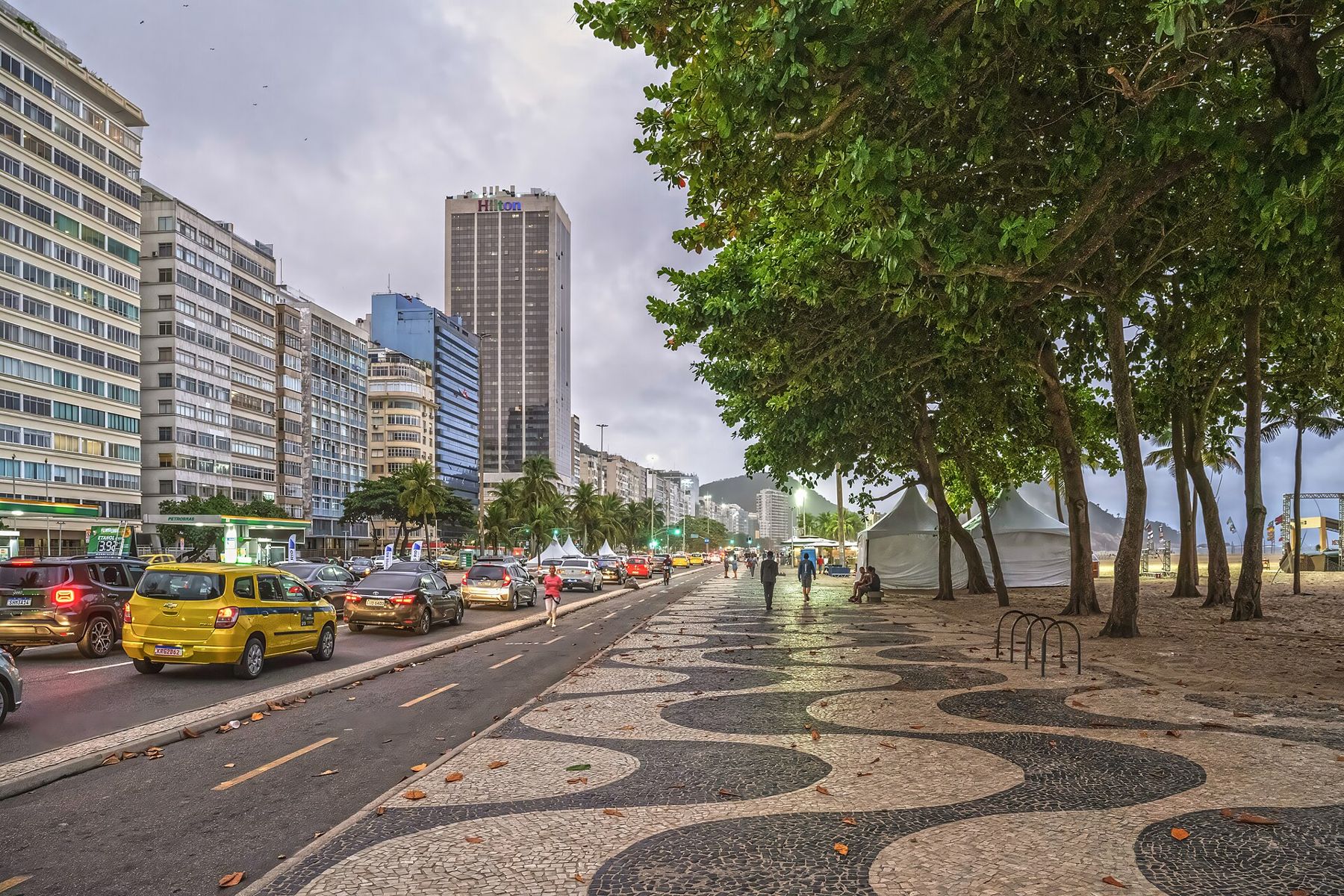
In the 1970s, when the avenue was widened and the beach was extended with sand dredged from the sea, the landscape architect Roberto Burle Marx redesigned the promenade. He kept the waves along the beach side and added bold abstract mosaics on the central strip and along the building side, so that the whole width of the street became a kind of giant artwork, best appreciated from the upper floors of the buildings above. Look down as you walk, and you will see how the patterns change from one stretch to the next.
The pavement is also a craft that needs constant care. Small stones work loose under millions of feet, tree roots lift sections, and teams of calceteiros, the paviors who lay the stones by hand, can often be seen kneeling on the promenade setting new cubes into sand and tapping them level. Watch them for a minute if you pass: it is the same method used for centuries in Portugal, and it is why the waves have survived.
Starting at Leme
Begin at Leme, the northern end of the beach, which is technically its own neighbourhood. It is quieter and more residential than the centre of Copacabana, with families on the sand and fishermen casting from the rocks at the point. Behind you, the green hill of Morro do Leme rises steeply; the fort on its top, described in up to the fort at Leme, gives a view down the whole beach and makes a good warm-up before the walk.
From Leme, simply head south along the waves.
Along the posts
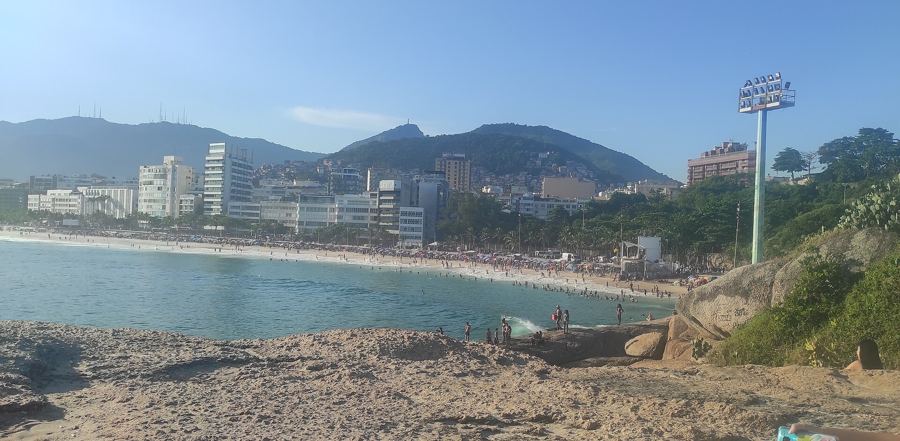
Along the beach, lifeguard posts, called postos, are numbered from north to south, and locals use them as addresses: people meet "at Posto 4" or swim "near Posto 5". Each stretch of beach has its own character, its own regulars and its own games of football, volleyball and footvolley, a Brazilian game played with the feet over a volleyball net.
- Near Leme: calmer, more families, the curve of the beach opening ahead.
- The middle stretch: the busiest part, with the grand old hotel buildings and beach sports.
- Towards the southern end: the beach narrows and the old fort comes into view.
Every few hundred metres, the beach has its own little world: regulars who meet at the same post every morning, games that have been running for decades, and vendors who know their customers by name. Kiosks along the promenade sell coconuts, drinks and snacks in general terms, and beach vendors walk the sand with everything from sunglasses to grilled cheese. Showers and toilets are available at some kiosks.
Look down as you walk, and you will see how the patterns change from one stretch to the next.
Copacabana is also a stage for events: huge free concerts have been held on the sand, and the New Year's Eve celebration, with millions of people dressed in white and fireworks over the sea, is one of the largest in the world. On an ordinary day, the stage is the beach itself, and the promenade is the best seat in the house. Stop at a kiosk, sit with a coconut and watch the city at play.
The sea here is the open Atlantic, with strong waves and currents on many days. Swim only near the lifeguard posts, follow the flags, and ask the lifeguards if you are unsure.
Posto 6 and the fishermen
Near the southern end, around Posto 6, a small colony of fishermen still works from the beach, launching small wooden boats into the surf early in the morning and returning with their catch. A small fish market sometimes operates beside their boats. It is a glimpse of the Copacabana that existed before the high-rise buildings.
The Copacabana fort
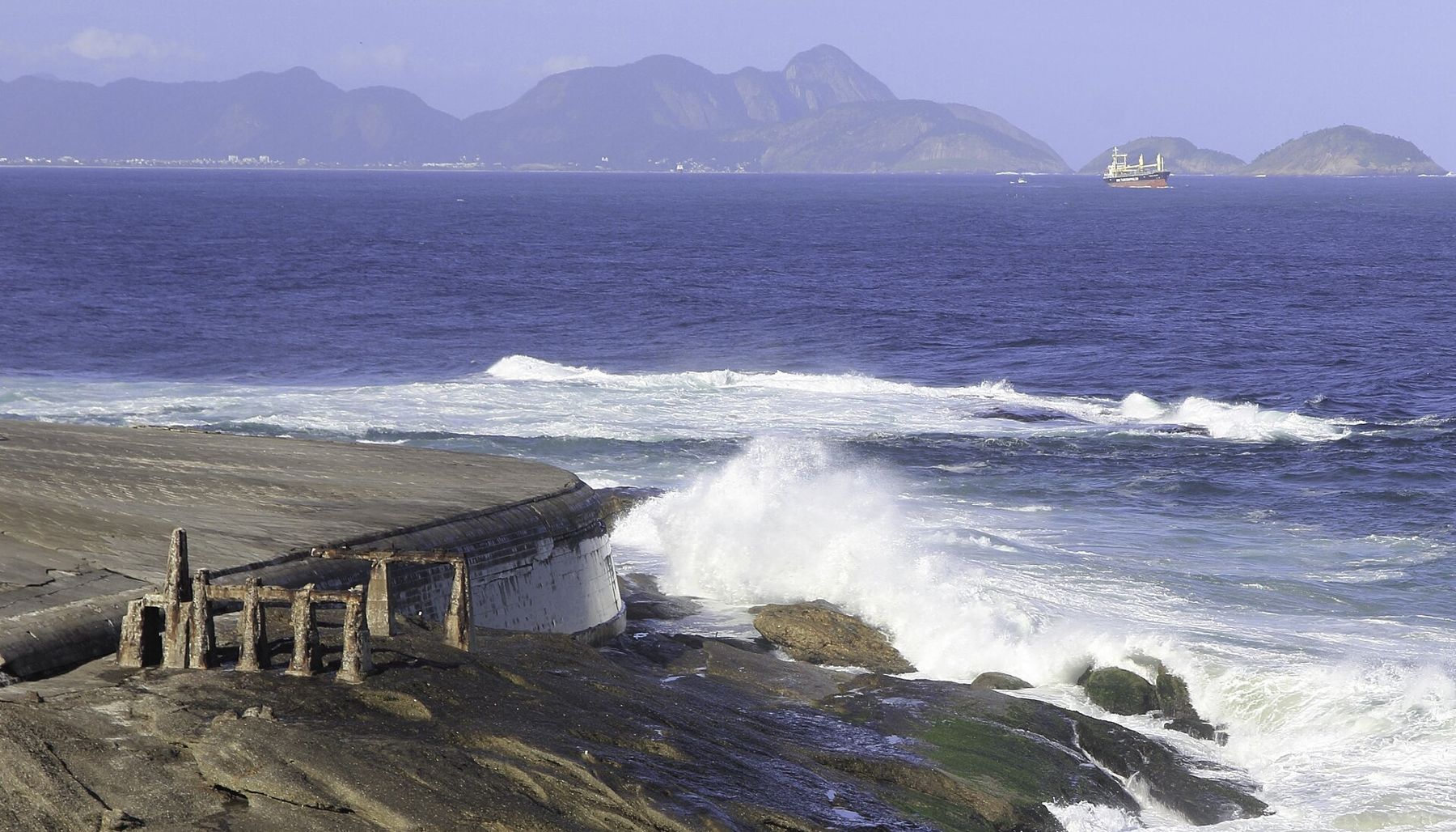
The walk ends at the Forte de Copacabana, built in the early twentieth century on the rocky point at the southern end of the beach. It is still a military area but open to visitors, with an army museum, the old gun emplacements and wide terraces looking back along the whole beach. The view at sunset, with the lights of the buildings coming on along the curve, is especially fine. Entry is charged and hours vary; check before you go.
Take a moment at the fort to look back the way you came. The four kilometres of beach curve away towards the green hill of Leme, the buildings stand shoulder to shoulder along the avenue, and the waves of the promenade run in a continuous ribbon between them and the sand. It is the best place to appreciate the whole design at once, and to understand why this stretch of coast became a symbol of the city. Coffee and a seat with the view are usually available inside the fort in general terms.
When to walk
- Early morning: runners, cyclists, fishermen and soft light.
- Late afternoon: cooler air, golden light and the sunset crowd.
- Sundays and holidays: the beachside lanes of Avenida Atlântica close to traffic and fill with walkers, cyclists and skaters.
- Midday in summer: very hot and crowded; save it for the beach itself.
The promenade is busy and lively from early until late, but take the usual precautions in a big, crowded city. Carry little, keep your phone out of sight in a front pocket, and never leave belongings unattended on the sand. At night, stay on the well-lit promenade and avoid the beach itself.
From the fort, the walk continues naturally around the point to Arpoador and Ipanema, described in Arpoador rock at sunset, then Ipanema. For a different kind of waterside walk, try the loop around the Lagoa, just inland.