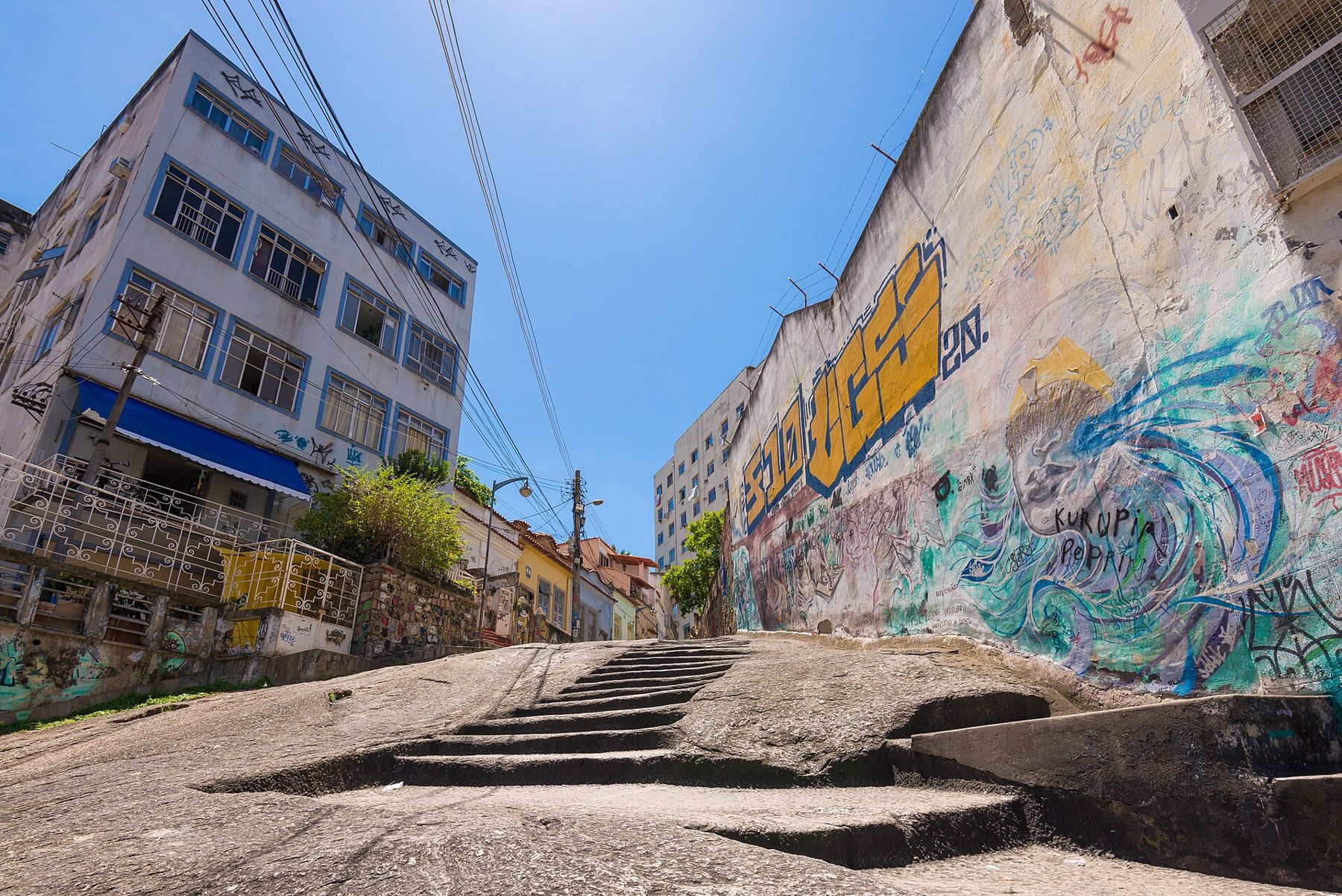
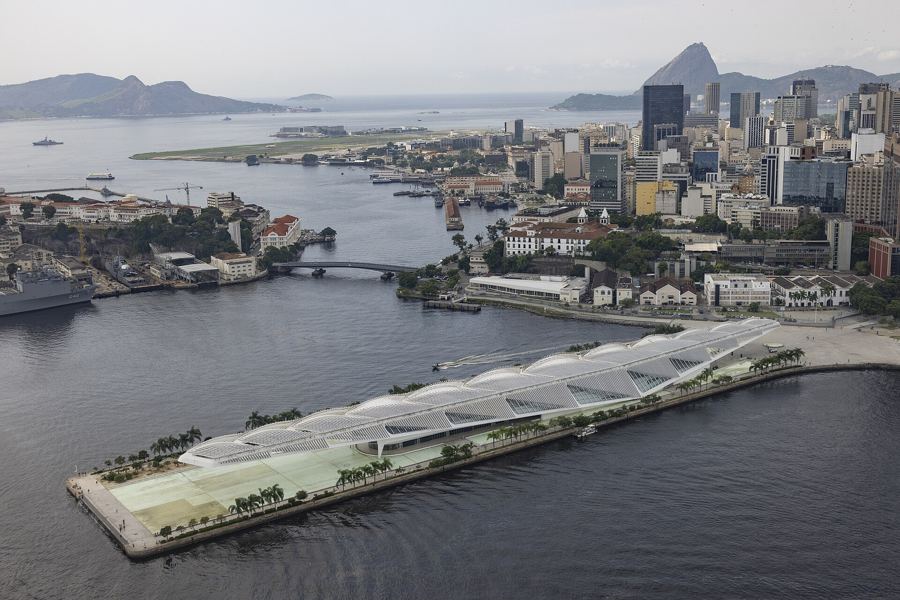
Most visitors pass straight by Morro da Conceição on their way between the port museums and the old centre. That is a shame, because this small hill, rising just behind Praça Mauá, is one of the best-preserved corners of colonial Rio. Its lanes are narrow and steep, its houses are low and painted in faded colours, and its streets are quiet in a way that feels a world away from the traffic below.
At the foot of its southern side lies Pedra do Sal, a rock face carved with steps that is one of the most important places in the city's Afro-Brazilian history.
Up from Praça Mauá
Start at Praça Mauá, the large open square by the port where the VLT tram stops and the new museums stand. From the inland side of the square, streets climb up onto the hill. Ladeira João Homem is one of the classic routes up, a steep cobbled lane between old houses.
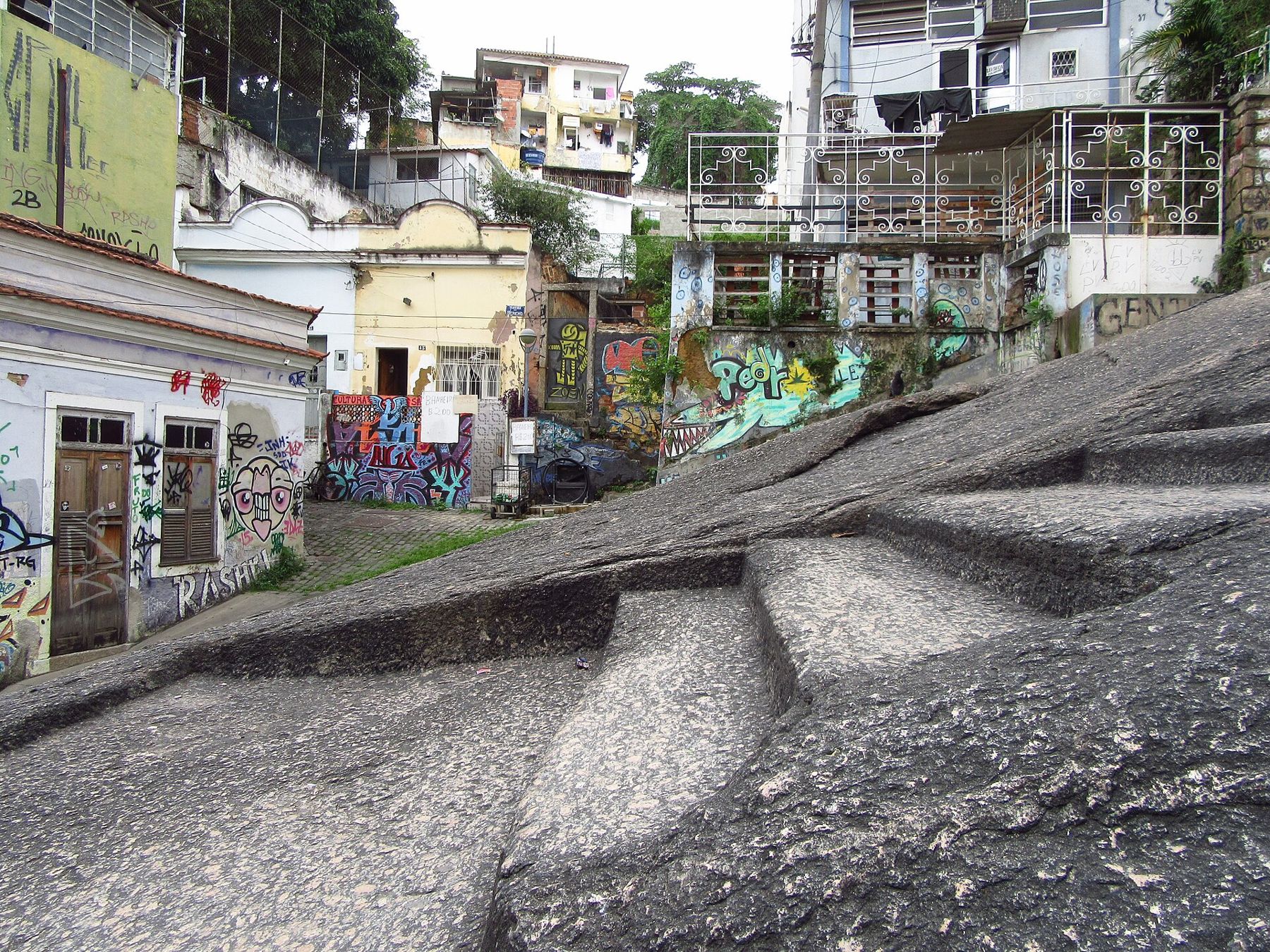
Once on top, the hill flattens into a web of short streets. Houses here date back in parts to the eighteenth and nineteenth centuries. Many are still family homes, and some artists have studios here, occasionally opening them to visitors. Walk slowly, look at the doorways and window grilles, and remember that this is a residential neighbourhood.
The hill takes its name from a chapel dedicated to Our Lady of the Conception, built here in the seventeenth century, and its streets grew up around the chapel and the fortress that followed. Unlike many parts of the old centre, the hill was never cleared for avenues or office blocks, which is why it keeps its scale. Look for the small chapels and niches at street corners, the stepped lanes linking one level to another, and the occasional view down to the cranes and warehouses of the port.
The fortress and the observatory
At the highest point of the hill stands the Fortaleza da Conceição, an old fortress whose walls once guarded the city. It remains a military site, so the interior is not generally open, but its walls and gate are part of the hill's character.
Nearby is the Observatório do Valongo, an astronomical observatory that belongs to a university and occasionally opens to the public for events. Its domes add an unexpected touch to the colonial skyline.
The hanging garden
On the hill's edge, the Jardim Suspenso do Valongo is a raised garden built in the early twentieth century, with balustrades, statues and a view over the streets below. It was designed as part of a wave of urban improvements and has been restored in recent years. It is a pleasant, shady place to pause and look out towards the port district.
Down to Pedra do Sal
Descend the hill on its southern side towards Largo João da Baiana, where a great rounded rock rises above the street, with steps carved into its face. This is Pedra do Sal, the Salt Rock.
In colonial times the area around it was part of the landing and trading zone of the port, where enslaved Africans were brought ashore and sold. After abolition, Afro-Brazilian communities settled here, and the area became known as Little Africa. In the late nineteenth and early twentieth centuries, musicians and dancers who gathered around Pedra do Sal helped shape the music that became samba. The rock is now a protected heritage site and an important place of memory.
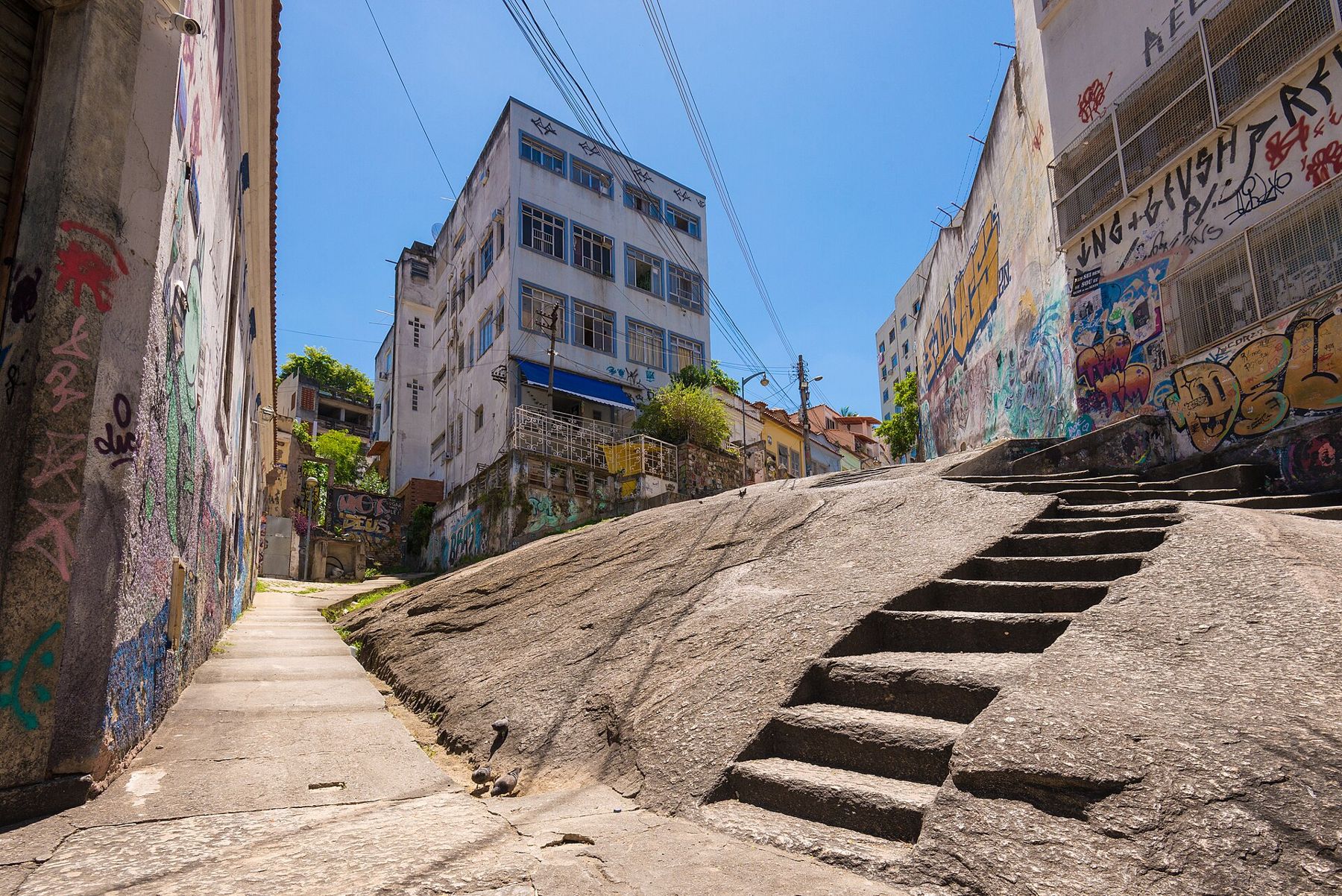
Stand back from the rock and look at the worn steps carved into it. On some evenings and weekends, live samba sessions take place around the rock, drawing large and lively crowds. During the day, the square is quiet, and it is easier to take in the place and its history.
Nearby, the streets of Saúde and Gamboa hold other traces of Little Africa: old warehouses, a cemetery of enslaved Africans rediscovered during building work, and cultural centres that keep the area's history alive. Several of these can be visited, with opening hours that vary; ask locally or check before you go. Taken together with the Valongo Wharf, they make this one of the most significant districts in the Americas for understanding the Atlantic slave trade and the cultures that survived it.
Practical notes
- Daylight is best for exploring the hill, which is quiet and has few people about on some streets.
- Evening samba events are crowded; keep belongings close and arrange your return in advance.
- Respect residents: keep noise down and ask before photographing people or homes.
- Wear shoes with grip for the steep lanes and the steps.
The whole walk is short, about 2.5 km with the loop over the hill and the descent to the square, but it rewards a slow pace. Two hours lets you look properly, read the signs and sit for a while in the hanging garden. Combined with the port museums, it makes a full and varied day without any long distances.
From Pedra do Sal, it is a short walk back to Praça Mauá and the port museums, covered in Praça Mauá and the port. The history of the port's role in the slave trade is told most powerfully at the nearby Valongo Wharf, part of the same walk. Heading south instead, the old heart of the city around Praça XV lies within easy reach.