Lapa sits at the edge of Rio's old centre, where the land begins to climb towards Santa Teresa. By night it is famous for music and crowded streets. By day it holds three of the city's most photographed landmarks within a few hundred metres: a colonial aqueduct, a staircase covered in tiles, and a cathedral like no other.
It is a short walk, but one that packs in a remarkable amount, and it links naturally to the hill neighbourhood above.
The Arcos da Lapa
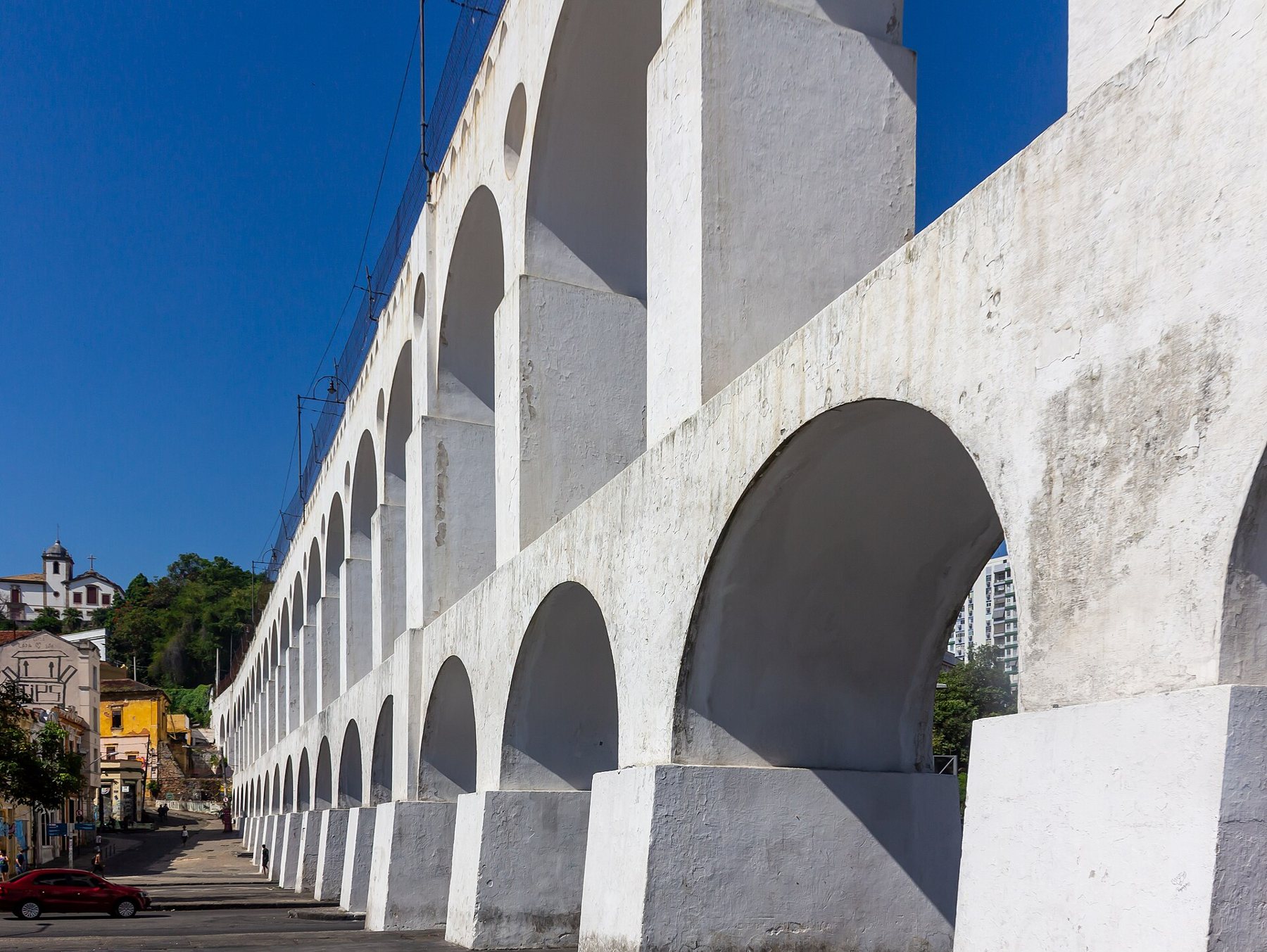
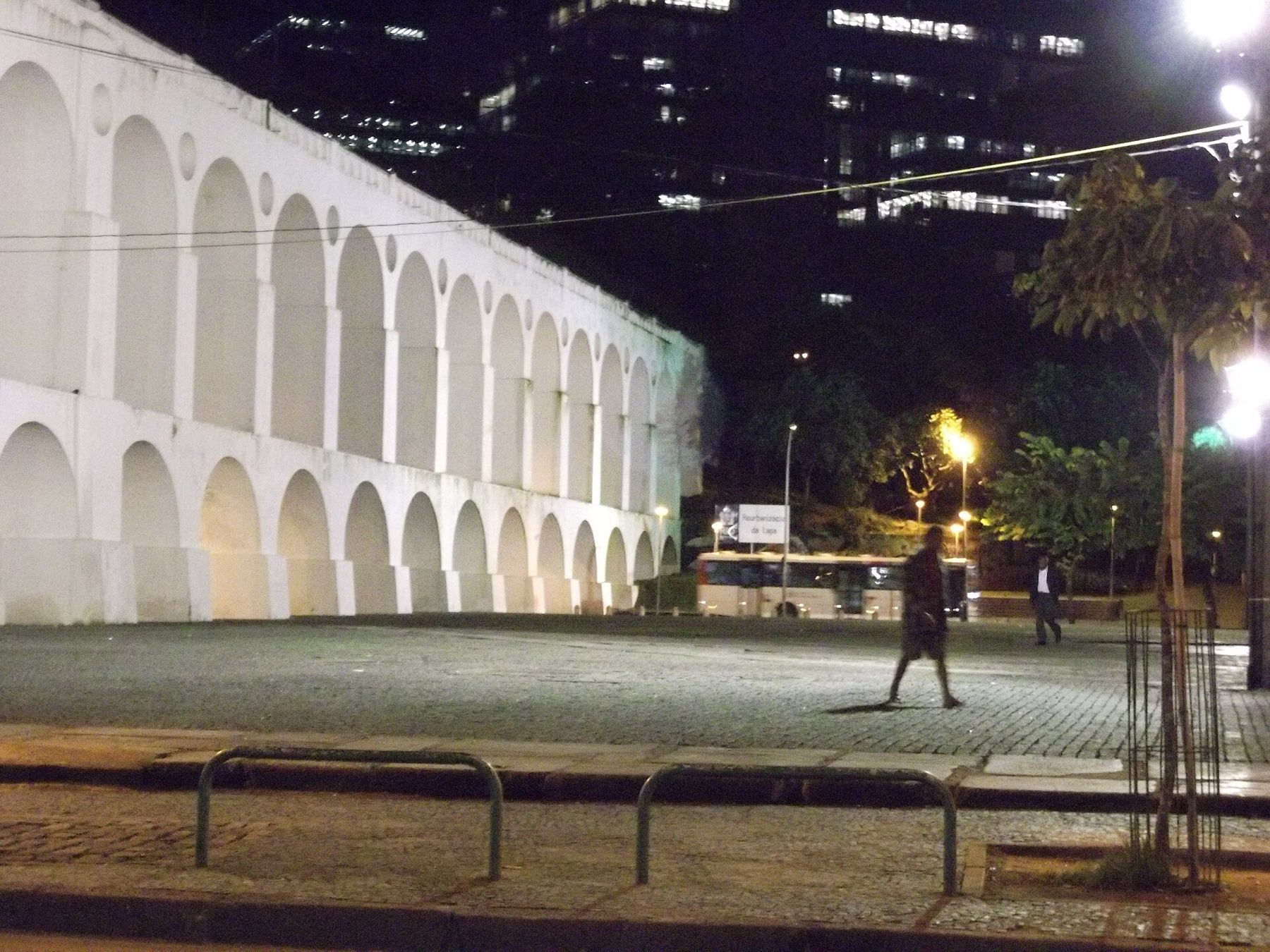
Start at the Arcos da Lapa, the long double row of white arches that strides across the square. They were built in the eighteenth century as the Carioca Aqueduct, carrying water from the hills to fountains in the centre of the city. With 42 arches in two tiers, they are one of the largest colonial structures in Brazil.
The aqueduct stopped carrying water long ago. Since the late nineteenth century it has carried something else: the tracks of the bonde, the small tram that climbs to Santa Teresa. Seeing the little yellow car cross the top of the arches, high above the square, is one of the classic images of Rio. Service has been interrupted in the past; check whether it is running if you hope to see it.
The area around the arches is a meeting point at all hours, with street vendors, musicians and people waiting for buses. Look at the arches from both sides of the square: from the Lapa side they frame the green hill of Santa Teresa, and from the other side the modern towers of the centre. Early in the morning, with the low sun on the white plaster, they glow.
The tiled staircase
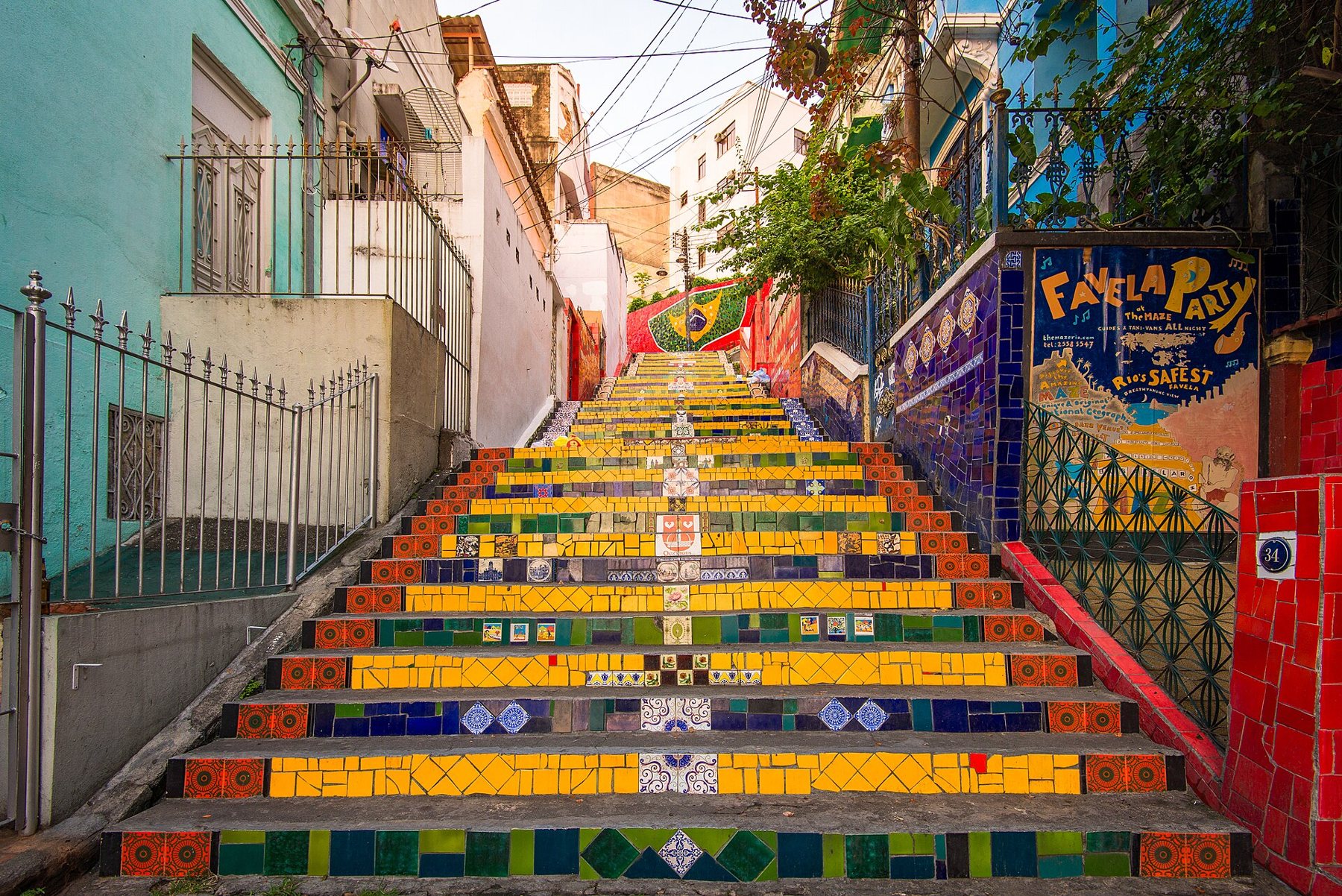
A short walk from the arches, a staircase climbs from Lapa towards Santa Teresa beside the walls of the old convent. It is officially the Escadaria Selarón, named after the Chilean-born artist who lived beside it and began decorating it around 1990. For more than twenty years he covered its 215 steps and the walls around them with tiles and mosaics, many in the colours of the Brazilian flag, many sent by visitors from countries all over the world.
The result is a riot of colour and pattern. Every step is different: tiles from distant countries, scenes of other cities, hand-painted figures and the artist's own designs. Walk slowly and look closely, and you will find tiles from dozens of nations.
The steps are now among the most visited places in Rio, and by late morning they are crowded with people taking photographs. Arrive early for a calmer visit and better light. Be patient with others on the narrow flights and keep an eye on your belongings in the crowd.
The artist called the staircase his tribute to the Brazilian people, and he kept changing it constantly, replacing tiles and adding new ones as they arrived. He died in 2013, on the steps he had spent decades transforming. Since then the staircase has been preserved as he left it, and it is protected as part of the city's heritage.
Up or down
At the top, the steps reach the edge of Santa Teresa near the convent. You can continue into the neighbourhood on foot, though it is a steep climb, or turn around and come back down. Many people prefer to explore Santa Teresa first and walk down the steps at the end, which is easier on the legs; that route is described in Santa Teresa: lanes, mansions and the bonde.
The Metropolitan Cathedral
Back near the arches, a short walk east brings you to the Catedral Metropolitana, completed in the 1970s. It is a huge concrete cone, about 75 m tall, that looks more like a modern sculpture than a church. Step inside and the effect is transformed: four enormous stained-glass windows rise from floor to apex, filling the vast interior with coloured light. The space can hold thousands of people.
The cathedral is a working church; dress respectfully and keep quiet during services. Check opening times before you go.
The cathedral's design caused controversy when it was built, and it still divides opinion, but few visitors fail to be impressed by the light inside. Come in the late morning, when the sun is high and the windows glow most strongly, and sit for a while on one of the benches. The cathedral also has a small museum of religious art, with its own opening hours.
Lapa by night, in general terms
After dark, Lapa becomes one of Rio's liveliest districts, with live samba, crowds in the streets and music spilling out of old buildings. It can be a great night out, but it is also crowded and chaotic. If you go, go with others, carry very little, keep your phone hidden, and arrange your transport home in advance rather than looking for it at the end of the night. This page is about the daytime walk.
Practical notes
- Morning light is best for the steps and the arches, and the crowds are thinner before ten.
- Bring small change if you want to buy a drink from a street vendor in the square.
- Wear shoes with grip; the tiled steps can be slippery.
- Combine with the theatre and library of Cinelândia, a few minutes away.