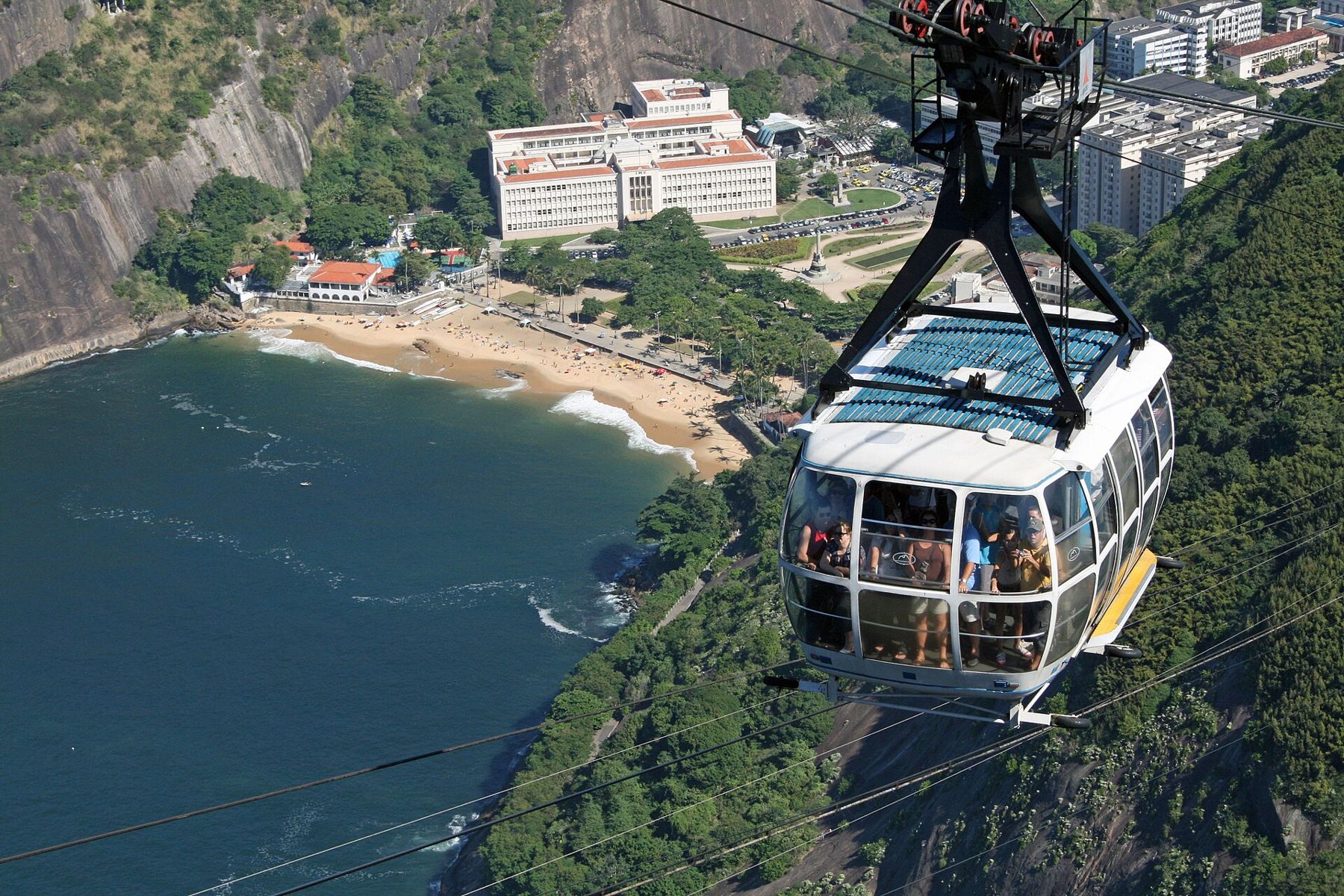
Urca is a small, quiet neighbourhood tucked between the Sugarloaf mountain and the waters of Guanabara Bay. Its streets are lined with low houses, its seawall is a favourite place to watch the sunset, and at its edge begins one of the most rewarding short walks in Rio: a flat path under the rock, followed, for those with the legs for it, by a steep climb through forest to the top of the smaller of the two peaks.
Praia Vermelha, the start
The walk begins at Praia Vermelha, a short sandy beach squeezed between the Sugarloaf and the hill of Babilônia. The square behind it holds the lower station of the Sugarloaf cable car, which carries visitors up in two stages: first to Morro da Urca, then on to the summit of the Sugarloaf itself. Most visitors ride both. Walkers can climb the first stage on foot.
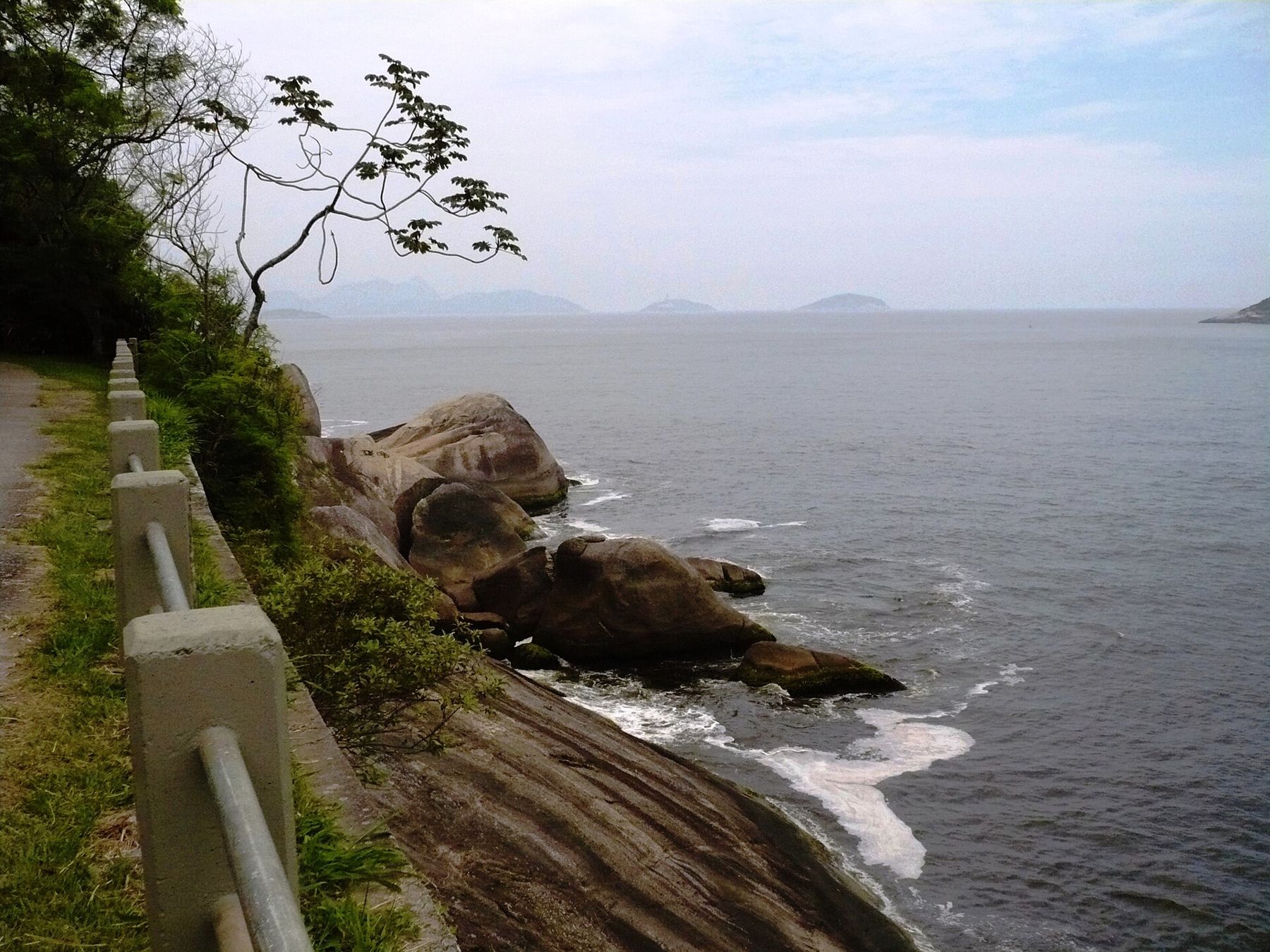
Praia Vermelha is easy to reach by bus or taxi. The beach is calm and good for a swim after the walk, though the water can be cold.
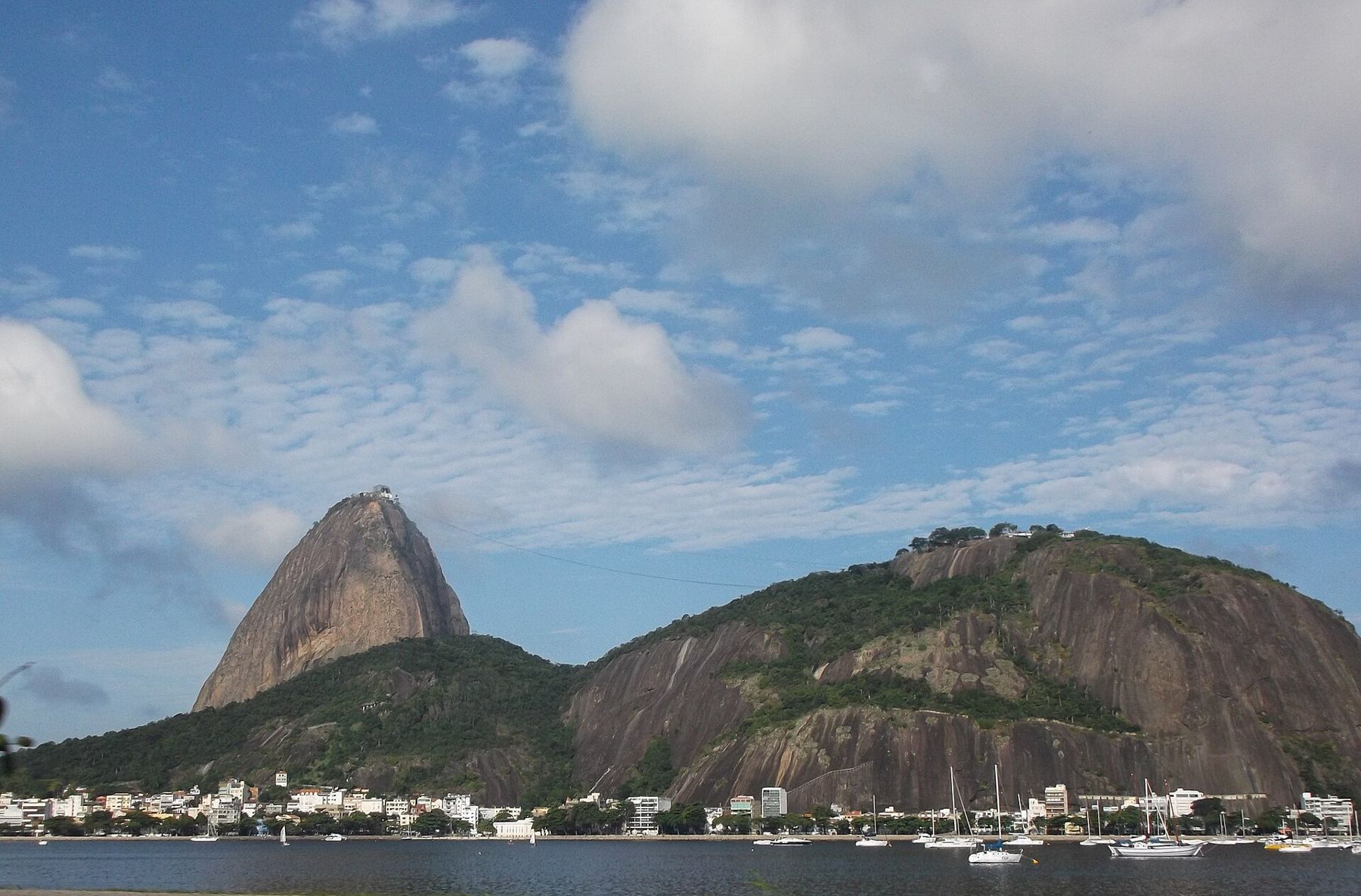
The Sugarloaf itself is a single, rounded block of granite and gneiss rising almost 400 m straight from the water, one of the most recognisable shapes on any coastline in the world. Seen from Praia Vermelha it looks impossibly steep. Climbers do scale its faces on established routes with proper equipment and, usually, guides; walkers stick to the forest trail on the smaller hill beside it, which is steep enough.
The Cláudio Coutinho path
At the left end of the beach, as you face the sea, a gate marks the start of the Pista Cláudio Coutinho. This is a paved path of about 1.2 km that runs along the foot of the Sugarloaf and Morro da Urca, between the rock and the ocean. It is almost flat, shaded in places by Atlantic forest, and lined with benches looking out over the entrance to the bay.
The path lies in a military area and is open at set hours, typically from early morning into the afternoon; check the current times before you go. It is popular with runners and families, especially early, and is one of the safest-feeling walks in the city.
Watch the trees and rocks along the way. Small marmosets live in the forest here and often come close to the path, along with lizards and birds. Do not feed them: human food harms them, and feeding encourages them to approach people.
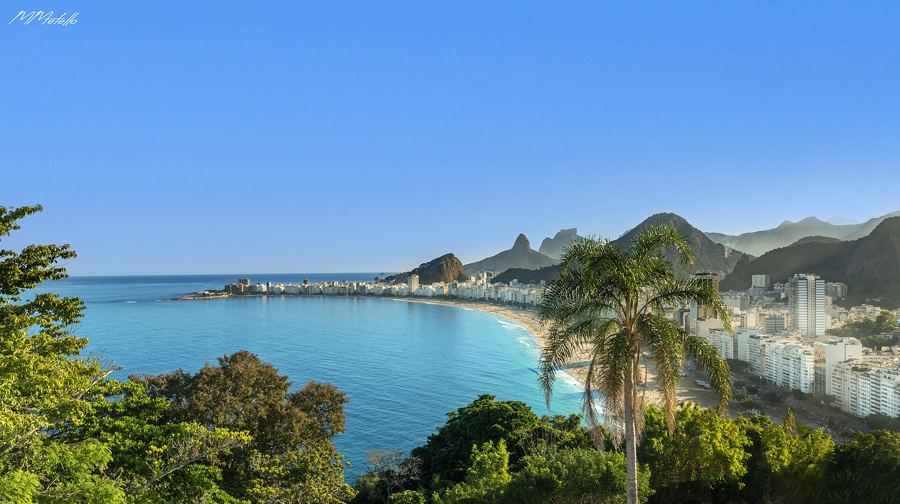
The path ends where the forest becomes too steep and the sea too close. Walk back the same way, or turn off for the climb.
It is almost flat, shaded in places by Atlantic forest, and lined with benches looking out over the entrance to the bay.
The climb to Morro da Urca
A short way along the Cláudio Coutinho path, a signposted trail turns uphill into the forest. This is the trail to the top of Morro da Urca, at about 220 m. It is steep and rocky, with roots, loose stones and a few sections where you use your hands, and it takes most walkers somewhere around 30 to 45 minutes to climb. It is a real workout in the heat, but it is short.
The reward at the top is the first cable car station and a series of terraces with views over Botafogo Bay, the beaches, the city and the Sugarloaf rising right in front of you. From here you can buy a ticket for the second stage of the cable car to the Sugarloaf summit, or ride the cable car back down. Policies on buying a ticket at the top instead of the bottom have varied, so check before you set out if you plan to walk up and ride on.

On the way up, pause at the rocky clearings: each one opens a different slice of the bay, with yachts at anchor off Botafogo and the curve of the Flamengo shore beyond. Walking down the same trail is possible but harder on the knees, especially if the rock is wet.
The terraces at the top of Morro da Urca have places to sit, shade, toilets and food stands in general terms, and it is easy to spend an hour there just watching the planes come in to the city airport across the bay, the ferries crossing to Niterói, and the cable cars swinging across to the Sugarloaf. Late afternoon is the most popular time for the view, as the sun sets behind Corcovado; the queue for the cable car down can be long then, so allow time.
Timing and conditions
- Start early. The morning is cooler, the light over the bay is clearer and the path is quieter.
- Avoid the climb after rain, when the rock and roots are slippery.
- Carry water; there is little on the trail itself.
- Clear days are worth waiting for. Cloud can hide the view from the top completely.
If you only have time for one part of the walk, choose by your energy and the weather. The Cláudio Coutinho path suits everyone, takes about an hour there and back, and gives the sea and the wildlife. The climb adds the view but needs fitness, dry conditions and a little more time. Both together, with a rest at the top and the ride down, fill a relaxed morning. The total distance of about 5 km includes the path both ways, the climb and some wandering at the top.
Around Urca afterwards
Back at sea level, walk round into the streets of Urca and along its seawall facing Botafogo Bay. Late in the afternoon, people gather on the wall to watch the sun drop behind Corcovado and the city. It is a calm, unhurried end to the day.
Urca is also one of the safest-feeling neighbourhoods in Rio for an evening stroll, with a military presence at the foot of the hill and many residents out walking along the seawall. The streets behind the wall are lined with low houses and gardens, and the area has a village calm unusual for a city of this size. Fishermen sometimes cast from the wall, and small boats bob at anchor in the cove.
From Urca, the long beaches of the south zone are a short bus or taxi ride away, round the foot of the hill. The walk along the Copacabana promenade starts at Leme, just around the hill, and the climb to the fort at Leme, described in up to the fort at Leme, is another short, steep walk with a similar view.